2026 Best OEM Vape Manufacturers for Global Buyers
Choosing an oem vape manufacturer in 2026 involves more than comparing unit prices. Global buyers must assess quality systems, supply-chain transparency, product documentation, and the supplier’s ability to meet requirements in each intended market. Small details matter: a material declaration, a dated inspection record, or a clearly identified production batch can make due diligence more practical.
Public-health evidence also belongs in this sourcing conversation. The World Health Organization reported in 2024 that more than 100 million people worldwide use e-cigarettes, including at least 15 million adolescents aged 13–15. This figure is a reminder that responsible sourcing must include safeguards against youth access and clear, accurate product information. It is not a measure of market opportunity. That distinction matters.
This guide compares manufacturers through verifiable indicators, including factory audits, quality-control procedures, component traceability, testing documentation, and after-sales support. Buyers should confirm that claims are current and independently supported where possible. They should also check applicable local rules before placing orders; requirements differ, and compliance cannot be assumed from one market to another. Certifications can help, but a certificate alone does not prove consistent production. There is no perfect checklist, either. A supplier may look strong on paper and still require closer review. The manufacturers discussed here are starting points for careful evaluation, not automatic endorsements.
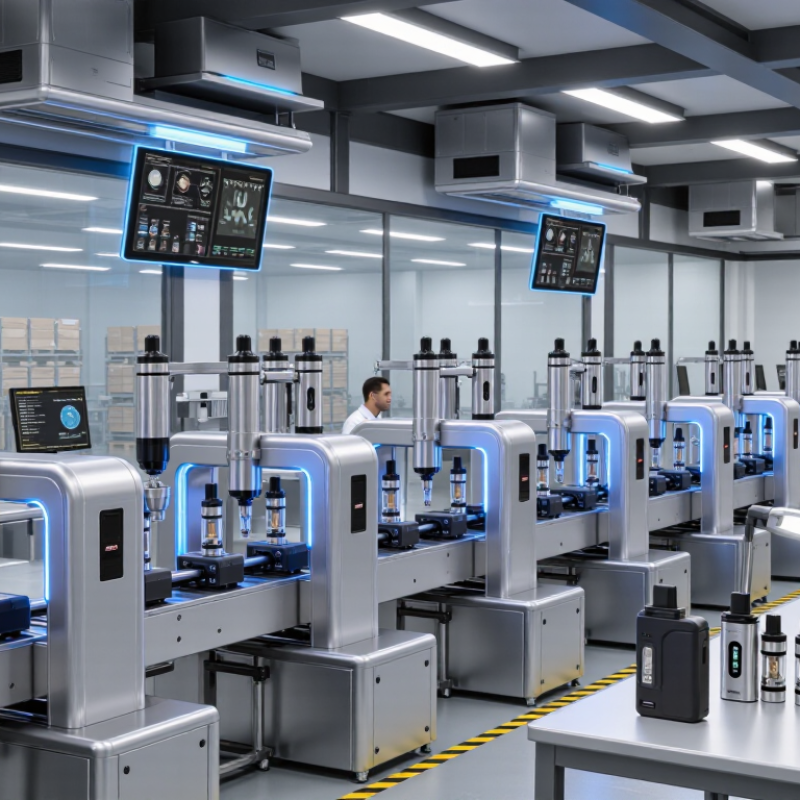
Understanding OEM Vape Manufacturing and Its Role in the Global Market
OEM vape manufacturing allows a buyer to define a product’s design and specifications while a manufacturing partner handles production. The arrangement can cover device dimensions, materials, packaging, and quality checks. That division of work matters in global trade, where buyers may need different configurations for different markets. A small change, such as a tighter airflow opening, can affect user experience and production consistency. Details matter.
A capable OEM partner should explain how it controls incoming materials, assembly steps, and finished-product inspections. Ask for sample units and clear records of testing, defect handling, and batch traceability. Do not rely on polished brochures alone. Manufacturing capacity is useful, but it does not prove that every batch will meet agreed specifications. Buyers should independently assess product documentation and applicable requirements in each intended market.
Tips: Share a written specification before requesting a quotation. Confirm who approves design changes and how rejected units are handled. Request a sample from a regular production run when possible. A short video call from the factory floor can help, though it is not a substitute for an audit. Some details may still feel uncertain; record open questions and resolve them before placing a large order.
Key Criteria for Evaluating Vape Manufacturers in 2026
For global buyers, evaluating an OEM vape manufacturer means checking processes, not just product samples. Grand View Research estimated the global e-cigarette market at USD 26.3 billion in 2023 and projected a 17.7% compound annual growth rate through 2030. That forecast is not proof of product quality. Ask suppliers for current quality-management certificates, traceable component records, and batch-level inspection results. Can they show what happens when a test fails?
Look closely at battery controls, material specifications, and production consistency. Request test reports tied to the exact model and production site, rather than generic certificates. Check whether incoming materials, assembly steps, and finished units are documented. Small details matter: a readable lot code, a sealed sample, and a clear defect-handling procedure. ISO 9001 can indicate a documented quality system, but certification alone does not guarantee reliable output.
WHO’s 2024 reporting estimated more than 100 million e-cigarette users worldwide, including at least 15 million adolescents. This is a public-health signal, not a sourcing endorsement. Buyers should assess age-related safeguards, packaging controls, and the manufacturer’s ability to meet destination-market requirements. Verify requirements independently; supplier assurances can be incomplete. A factory visit helps, but one visit may show only its best day. Compare audit records, repeat-sample results, and corrective-action evidence before committing to production.
Comparing Manufacturer Capabilities, Product Types, and Customization
For global buyers, comparing OEM vape manufacturers means looking beyond a polished sample. Check whether the factory can document material sourcing, assembly controls, and batch traceability. Ask to see how it tests battery performance, leakage, and consistent aerosol output. Clear records matter.
Product range also affects the comparison. Some manufacturers handle compact pod devices, while others focus on disposable or refillable formats. Confirm which components they produce in-house and which come from suppliers. A capable engineering team should explain trade-offs in airflow, capacity, and device dimensions without promising impossible results. Details count.
Customization may include housing colors, surface finishes, packaging, and device specifications. Request written limits, sample timelines, and approval steps before production. Small changes can require new tooling or extra checks. A polished sample can still conceal inconsistent mass production; that risk deserves a direct question. Ask how defects are recorded and addressed. Requirements differ by destination, so buyers should verify applicable product, labeling, and import rules with qualified local professionals before placing orders.
Checking Quality Systems, Certifications, and Regional Compliance
2026 Best OEM Vape Manufacturers for Global Buyers
Quality systems, certifications, and regional compliance should be checked before comparing OEM quotations. The WHO’s 2023 Global Tobacco Epidemic report maps regulatory action on e-cigarettes across 121 countries, underscoring how requirements differ by market.
Ask manufacturers for the current quality certificate, its covered facility and product scope, and recent audit findings. An ISO 9001 certificate can indicate a managed quality system, but it is not product approval. Paperwork matters.
For each destination, confirm applicable product, labeling, packaging, and import requirements with qualified local advisers. Request batch-level traceability, written material specifications, and test reports tied to the exact model being purchased.
Reports should identify test methods, sample dates, and the laboratory; ISO/IEC 17025 accreditation can help assess laboratory competence. Check battery and electrical safety documentation where relevant. One sample is not enough: compare production-lot records, and verify that design changes trigger renewed review.
Tips:
Ask to see a mock batch record, not just a certificate PDF. Match serial or lot codes across the product, packaging, and test file. Keep a dated compliance matrix for each market, then recheck it before shipment. Supplier answers may be incomplete; record gaps and resolve them before approving production.
Planning Supplier Selection, Sampling, and Production Agreements
Choosing an OEM vape manufacturer starts with evidence, not polished sales decks. Ask who controls production, how components are traced, and what quality checks are recorded. Request recent audit documents and clear answers about rejected batches. Verify that the supplier can support the product specifications and documentation required in each intended market. Requirements vary. A confident answer without records is not enough.
Sampling should test the agreed specification, not just appearance. Compare device dimensions, materials, packaging, and performance across several units. Record batch numbers and inspection results, then ask how defects are investigated. Keep a sealed reference sample for later comparison. Even a neat sample can mislead. A sample may be hand-finished, while routine production follows a different process; ask how samples are made and whether production units will match.
Production agreements need measurable terms. Set tolerances, inspection points, delivery windows, change approval, and remedies for nonconforming goods. Define ownership of tooling and approved artwork, plus rules for protecting technical files. Require written notice before component substitutions. Confirm responsibilities for lawful-market documentation, packaging review, and age-control requirements where applicable. Small details matter. Teams sometimes leave acceptance criteria vague, then discover too late that both sides read “consistent quality” differently. Put those criteria in a signed schedule, and retain dated records of approvals.