7 Off Road Dump Truck Buying Tips

Choosing an Off Road Dump Truck is a major equipment decision, not just a matter of comparing prices. The right machine must match your site, material, and daily hauling demands. A truck that works well on a wide quarry road may struggle on soft ground, steep grades, or tight loading areas. Small details matter.

These seven buying tips focus on practical checks: payload capacity, engine performance, tire and suspension design, braking systems, cab visibility, maintenance access, and dealer support. Compare rated capacity with the loads you actually move. Check the route, too. Mud, loose rock, sharp turns, and repeated climbs can change which specifications matter most. Ask for service records and clarify parts availability before committing.

A careful inspection should include more than a quick walk-around. Look for frame damage, uneven tire wear, fluid leaks, and signs of excessive heat around brakes or engine components. If possible, arrange a controlled test under conditions similar to your worksite. Confirm operating costs with current fuel, maintenance, and repair estimates rather than relying on a single sales figure. Even experienced buyers can overlook a detail when schedules are tight. I would not assume that the largest truck is automatically the best choice; a mismatch can raise costs and slow work. Use this guide to frame better questions, compare options consistently, and make a decision grounded in your operating needs.
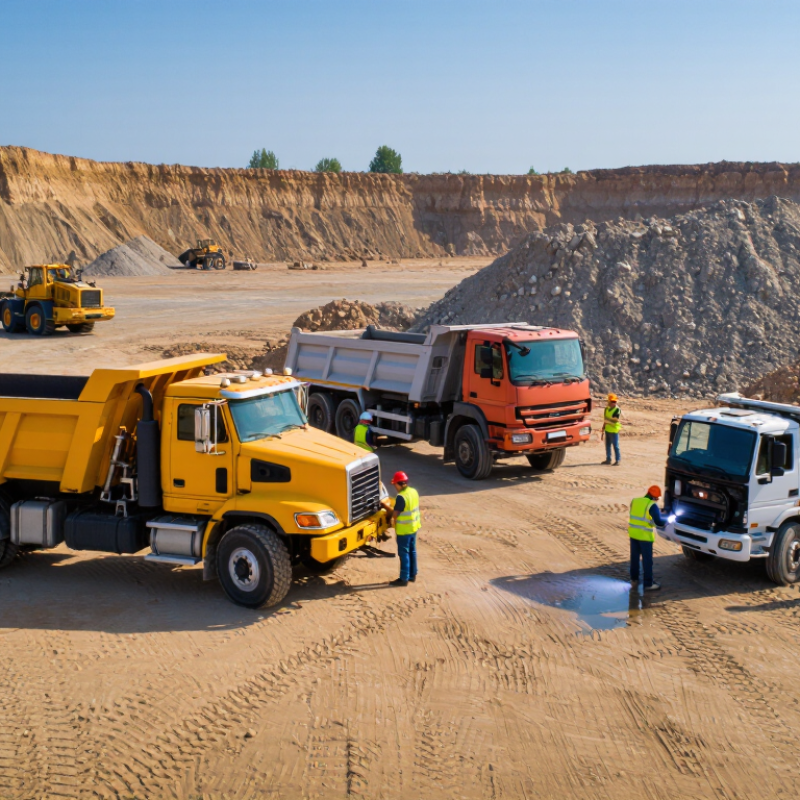
7 Off Road Dump Truck Buying Tips

Define the Truck’s Intended Work and Operating Conditions

Before comparing dump truck sizes, define the work the machine must perform each day. Record the typical payload, material type, haul distance, and number of trips per shift. Wet clay, loose gravel, and blasted rock behave differently, so note the material’s weight and how easily it loads and unloads. A truck that looks adequate on paper may struggle with dense loads or a tight loading area. Measure it.

Map the route, including gradients, soft ground, sharp turns, and the condition of haul roads after rain. Small details matter. A short, steep climb can affect cycle time more than a longer, level road. Check clearance beneath overhead structures and turning space near loading and dumping points. Also consider dust, temperature, work hours, and access for routine maintenance. Ask operators and site supervisors where delays occur; their observations may reveal constraints missing from a plan. Treat early estimates as provisional. Field conditions often expose what a spreadsheet missed. The right truck is the one suited to the actual route, load, and operating schedule, not simply the largest available option.

Choose the Appropriate Truck Type and Payload Capacity

Choose the truck type to match the ground and haul route. Articulated dump trucks suit uneven, soft routes and tight turning areas; rigid-frame trucks generally fit firm, well-maintained haul roads. Check gradients, turning radius, loading space, and travel distance on site. A truck that cannot reach the loading point safely is the wrong choice, whatever its rated payload.

Payload must match both material density and the job’s daily target. The U.S. Geological Survey’s Mineral Commodity Summaries 2024 estimated U.S. construction sand and gravel production at 960 million tons in 2023, showing the scale of material movement behind many aggregate operations. Use a site-specific estimate: divide the required tonnage by expected trips, then check that each load stays within the truck’s rated capacity. Measure the material’s bulk density; wet sand can weigh more than a dry-volume estimate suggests. Small error, costly result.

Compare payload with body volume, loader bucket size, and cycle time. A large truck may wait while a smaller loader fills it, while an undersized truck can add trips and fuel use. Test the calculation against actual loading and travel times where possible. Those estimates are imperfect. Recheck them after rain, route changes, or a shift in material type, and leave room for real operating variation.

Compare Engine, Drivetrain, and Terrain Performance

Engine power matters, but peak horsepower alone will not tell you how a dump truck handles a loaded climb. Compare torque at working speeds and ask how the engine responds when the bed is full. A truck that feels strong on flat ground may slow sharply on a long, loose incline. That matters. Check cooling capacity, too, especially if the route includes slow crawling in hot weather. Ask for performance data under loads similar to yours, not just an empty-truck test.

Match the drivetrain to the ground you actually travel. Two-wheel drive may suit firm, graded haul roads, while all-wheel drive can help on muddy approaches or uneven work sites. Extra traction brings more parts and maintenance needs, so it is not automatically the better choice. Not on paper. Look at axle ratios, differential options, tire clearance, and ground clearance together. A deep rut can stop a truck with ample engine power if the undercarriage catches.

If possible, test a loaded unit on representative terrain. Watch wheel slip, gear changes, braking, and how steadily it climbs. Ask operators what happens after repeated trips, not just during one demonstration. Their feedback may be incomplete, but ignoring it is a mistake. Compare fuel use across the same route and payload; otherwise, the numbers can mislead.

Assess Safety Features, Durability, and Serviceability

7 Off Road Dump Truck Buying Tips

Assess Safety Features, Durability, and Serviceability

An off-road dump truck earns trust through details operators can inspect. Check cab sightlines, camera coverage, mirrors, alarms, handrails, and access steps. Ask for brake and rollover-protection specifications, not just a sales checklist.

MSHA’s 2023 mining fatality summary recorded 40 deaths across U.S. mining; powered haulage remains a tracked fatality hazard. That number deserves attention.

Test visibility with the body raised only under controlled conditions. Confirm warnings remain audible near crushers or loaders.

Durability is more than thick steel. Inspect welds around the body, hinge pins, suspension joints, hose routing, and cylinder protection. Request service records from comparable duty cycles, plus component-life and fuel-use data. Unusually neat averages need scrutiny.

For serviceability, check whether filters, grease points, batteries, and diagnostic ports are reachable without removing panels or climbing onto unsafe surfaces. Ask how long routine jobs take and which wear parts are stocked locally. A machine can be tough yet awkward to repair.

I would ask technicians to review the maintenance manual before purchase; specifications rarely show every cramped access point. Leave room for doubt. A brief inspection may miss problems that emerge after months of dust, heat, and heavy loading.

Evaluate Total Ownership Costs and Dealer Support

An off-road dump truck’s purchase price is only the entry point. Estimate fuel per working hour, tire life, planned service, and likely resale value. Match those estimates to your actual route: loaded uphill runs consume more fuel than short, level hauls. Ask the seller to explain the assumptions behind any cost-per-hour figure. A clean spreadsheet can still miss muddy access roads, long idle periods, or one delayed part. Downtime gets expensive.

Dealer support belongs in the same calculation, not apart from it. Confirm local technicians’ response times, after-hours coverage, parts availability, and whether field repairs are included. Ask how routine service is scheduled during peak shifts, and request references from operators with similar workloads. Read warranty terms closely; travel, wear items, and transport may be treated differently. I’d leave room for uncertainty, because actual tire wear and cycle times rarely match an initial estimate. That can be frustrating. Track operating hours and repair delays during the first months, then compare them with the dealer’s service commitments.