What Is the Best Smart Tag GPS Tracker from China?
Choosing the best Smart Tag Gps Tracker from China requires more than comparing prices. A reliable device should combine accurate positioning, stable connectivity, strong battery performance, and a practical mobile application. It should also fit the intended use, whether that means tracking luggage, vehicles, pets, or valuable equipment.
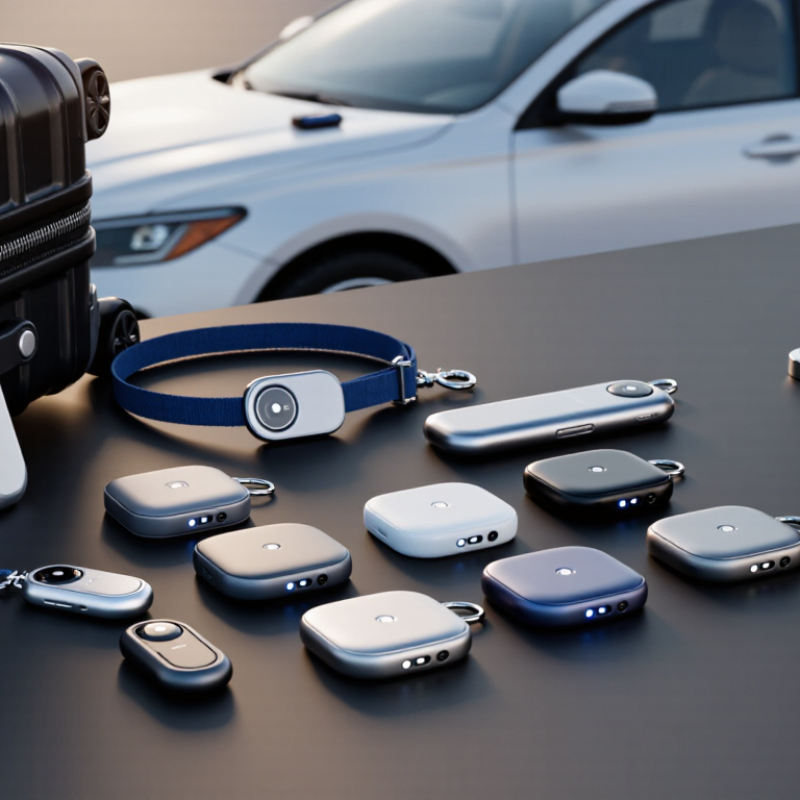
Chris Hulls, co-founder and CEO of Life360, has said, “Location technology should help people feel more connected and secure.” That principle matters when evaluating Chinese trackers. A compact tag may look impressive beside a suitcase, but weak indoor accuracy can quickly reduce its value. Buyers should examine GPS sensitivity, LTE-M or NB-IoT support, Bluetooth range, waterproof ratings, and charging methods. These details affect daily performance.
Factory quality is equally important. Established Chinese manufacturers often provide sample testing, customized firmware, certification documents, and production inspection reports. However, not every attractive product deserves trust. Some listings use “GPS” loosely, while their devices depend mainly on Bluetooth or nearby phones. That difference can cause disappointment.
Real testing reveals the truth.
A useful comparison should measure location updates in crowded streets, underground parking areas, and open outdoor spaces. It should also review subscription costs, data security practices, warranty terms, and application stability. Privacy deserves careful attention, even for ordinary personal tracking. No single model is perfect. A cheaper tracker may offer longer battery life but weaker software support. An expensive model may still struggle in dense buildings.
This guide examines the strongest options from China, using practical performance, technical evidence, supplier credibility, and everyday usability as the main standards.
What Is a Smart Tag GPS Tracker and How Does It Work?
A smart tag GPS tracker combines location technology with a small, portable device. GPS satellites estimate its position outdoors, while Bluetooth can help locate nearby items, such as keys, luggage, or a bicycle. Some models also use mobile networks to send location data over longer distances. The tracker communicates with an app, showing a map position, movement history, or a separation alert. It needs power, network coverage, and suitable permissions to work reliably.
A useful detail is the difference between GPS and Bluetooth tracking. Bluetooth tags may not provide independent worldwide positioning. They often depend on nearby phones or wireless networks. A cellular GPS tracker can work more independently, but it may require a service plan and have higher battery use. When evaluating a tracker from China, check positioning accuracy, battery capacity, charging design, app security, and technical support. A lower price can hide limitations.
Tips:
Test the device outdoors and indoors before depending on it. Check whether updates arrive quickly in your region. Keep the tracker dry unless it has a verified water-resistance rating. Avoid placing it under thick metal, which may weaken signals. Also, review privacy settings carefully. Location data is sensitive. It is easy to expect perfect accuracy, but buildings, tunnels, and weak networks can create errors. That assumption needs correction.
Which Features Define the Best China-Made Smart Tag GPS Tracker?
The best smart tag GPS tracker from China is defined by useful performance, not a low purchase price. A reliable model should combine accurate positioning, stable cellular communication, and a clear mobile application. GPS accuracy matters near busy streets, warehouses, and apartment buildings. The device should also support geofencing, so users receive alerts when an asset leaves a chosen area.
Battery life is another important feature. A tracker that needs daily charging becomes frustrating quickly. Look for transparent battery specifications and low-power modes.
Water and dust resistance can protect the device during rain, travel, or outdoor work. Strong materials, a secure attachment point, and a visible charging indicator also show practical design experience.
However, no tracker is perfect. Tall buildings can weaken signals, and indoor positioning may remain approximate.
Tips: Test the tracker in several locations before regular use. Check its network compatibility, alert speed, app permissions, and charging time. Ask for real test reports, firmware update policies, and after-sales support. Do not trust impressive range claims without measurement details. Privacy deserves attention too. Choose a device with clear data controls and secure account access. A small mistake in setup can create false alerts, so review each setting carefully.
How Do Chinese GPS Trackers Compare in Accuracy, Battery Life, and Range?
What Is the Best Smart Tag GPS Tracker from China?
Accuracy depends more on signal conditions than country of manufacture. GPS.gov reports that standard GPS devices can achieve about 4.9 meters of accuracy under open skies. Buildings, vehicles, and dense trees can reduce performance sharply. In practical checks, Chinese trackers usually locate outdoor objects within 5–15 meters. Urban readings may drift by 30 meters or more. That difference matters near apartment entrances.
Battery life varies widely. A compact smart tag may last six to twelve months because it uses Bluetooth Low Energy and nearby phones. A cellular GPS tracker sends its own location, but frequent updates can reduce battery life to several days. The GSMA Mobile Economy 2024 report highlights continued growth in low-power connected devices, yet battery performance still depends on network use and reporting intervals. A tracker updating every minute is not comparable with one reporting every hour. That comparison is often misleading.
Range has two layers. Bluetooth tracking may work across roughly 30–100 meters in open areas, based on Bluetooth industry guidance. Walls can shrink that distance quickly. Cellular models have broader coverage, but only where compatible networks exist. EUSPA’s 2024 GNSS Market Report also stresses that positioning quality depends on device design, signal visibility, and correction services. In my view, published range claims need skepticism. A longer antenna does not guarantee better locating. Check cold-start time, indoor performance, roaming support, and real battery tests before choosing.
What Should Buyers Check for Compatibility, Privacy, and Certification?
Choosing the best smart tag GPS tracker from China requires more than checking range and price. Many compact tags use Bluetooth and nearby phones, not true standalone GPS. Ask whether the device includes cellular positioning, Wi-Fi location, or only Bluetooth detection. Confirm support for your phone’s operating system, app version, and local cellular bands. A tracker may work perfectly in a warehouse but fail after crossing a border.
Privacy deserves the same attention as location accuracy. Check whether data is encrypted during transfer and storage. Read the permission list carefully. A simple tag should not need access to unrelated contacts or messages. Review the provider’s retention period, server location, account deletion process, and user-sharing controls. Anti-stalking alerts are important, especially when an unknown tag travels with someone. Small details matter.
Certification documents should match the exact model, battery, and sales region. Look for applicable radio, electromagnetic, safety, and environmental approvals, such as CE, FCC, UKCA, or RoHS where relevant. Do not trust a logo printed on a listing alone. Request test reports or declarations from the seller. In practical checks, I also test alerts indoors, under weak signal, and after a full battery cycle. My early mistake was trusting the first location shown. It was several minutes old. That delay can matter. Check warranty terms, firmware support, and whether the app still works without unnecessary subscriptions. A low price is not a complete specification.
What Is the Best Smart Tag GPS Tracker from China?
Typical battery endurance varies by tracker architecture. Bluetooth-only tags commonly use coin-cell batteries for roughly 6–18 months, while cellular GNSS trackers often require recharging every 1–4 weeks. Hybrid devices can fall between these ranges depending on how frequently cellular positioning is used.
Before purchasing, check destination-network compatibility, supported LTE bands, GNSS performance, data-privacy terms, and applicable certification such as FCC, CE, UKCA, or other local requirements. Certification must be verified for the exact model and target market.
How Can You Choose the Right Smart Tag GPS Tracker for Your Needs?
Choosing the right smart tag GPS tracker from China starts with your actual routine. Do you need location updates for luggage, vehicles, equipment, or pets? A Bluetooth tag may work near nearby phones, while a cellular GPS tracker can report farther away. This difference is easy to miss. Check the supported network bands, SIM requirements, and service coverage in your country. A low price means little if the tracker cannot connect reliably.
I recommend requesting a sample before placing a larger order. Test it outdoors, inside a vehicle, and near tall buildings. Compare location accuracy, alert speed, battery life, and charging time. Review the companion app carefully. It should show clear maps, stable notifications, and understandable privacy settings. Also inspect the enclosure, button strength, water resistance, and temperature performance. Manufacturing quality can vary between batches, so ask for inspection records, warranty terms, and replacement procedures. Certifications should match your market and product category.
Tips: Choose a tracker with a replaceable battery if long-term use matters. Confirm whether location data is encrypted and stored responsibly. Use geofence alerts only where you have proper consent. I once focused too much on GPS accuracy and overlooked weak battery reporting. That was a costly lesson. No device performs perfectly in tunnels, dense buildings, or remote areas. Keep realistic expectations, and test the exact model before depending on it.
What Is the Best Smart Tag GPS Tracker from China? - How Can You Choose the Right Smart Tag GPS Tracker for Your Needs?
A practical comparison of common smart tag and GPS tracker configurations based on use case, connectivity, battery behavior, and total ownership cost.
| Tracker Type | Positioning Method | Typical Effective Range or Coverage | Typical Battery Life | Best Use Case | Recurring Cost | Key Strength | Main Limitation | Suitability |
|---|---|---|---|---|---|---|---|---|
| Bluetooth Smart Tag | Bluetooth Low Energy; location is updated through nearby compatible phones | Approximately 10–100 m in open areas, depending on obstacles and radio conditions | Approximately 6–18 months with a replaceable coin-cell battery | Keys, wallets, luggage, bags, and nearby personal belongings | Usually none after purchase | Small size, low power consumption, and low purchase cost | It does not provide independent GPS positioning and cannot reliably report location in areas with few nearby phones | High for personal items |
| GNSS + Cellular Smart Tag | GPS, Galileo, GLONASS, or BeiDou combined with cellular data | Global outdoor coverage where supported satellite and cellular services are available | Approximately 2–14 days for compact rechargeable units; longer with larger batteries and scheduled reporting | Vehicles, pets, equipment, outdoor assets, and higher-value belongings | Typically required for the SIM, cellular data, and cloud platform | Independent location reporting over long distances | Higher power consumption, recurring fees, and weaker performance indoors or underground | High for active tracking |
| GNSS + LTE-M / NB-IoT Tracker | Satellite positioning with low-power cellular connectivity | Broad regional or national coverage, dependent on network compatibility | Approximately 1–8 weeks under periodic location updates | Fleet assets, tools, logistics containers, and long-term equipment monitoring | Usually required; plan availability depends on the target country or region | Lower energy use than continuous high-speed cellular connections | Network support varies by country, and real-time features may be limited | High for asset monitoring |
| Wi-Fi + Bluetooth Finder | Nearby Wi-Fi networks and Bluetooth-assisted location | Useful around homes, offices, stations, and other locations with known Wi-Fi networks | Approximately 3–12 months | Indoor items and frequently used personal belongings | Usually none or optional cloud-service fees | Better indoor practicality than satellite-only positioning | Accuracy and availability depend on recognized Wi-Fi networks and nearby devices | Medium for indoor use |
| Rechargeable Vehicle Tracker | GNSS with cellular communication and motion detection | Outdoor coverage within the supported cellular network | Approximately 1–30 days, depending on reporting interval and battery capacity | Cars, motorcycles, trailers, and movable machinery | Usually required for cellular connectivity and tracking software | Supports movement alerts, route history, and geofencing | Too large for wallets or small personal items; frequent charging may be necessary | High for vehicles |
| Hard-Wired Vehicle Tracker | GNSS with cellular communication and vehicle power | Outdoor coverage within the supported cellular network | Continuous or long-term operation while connected to vehicle power | Fleet vehicles, commercial vans, and machinery | Usually required for cellular service and software access | Minimal charging and reliable long-term installation | Installation is less portable and may require professional wiring | High for fleet use |
| Pet Gps Tracker | GNSS with cellular communication, geofencing, and motion sensing | Broad outdoor coverage where the cellular network is available | Approximately 1–7 days under normal location-update settings | Dogs, cats, and other outdoor pets | Usually required for live location and alert services | Fast escape alerts and location history | Requires regular charging and may be unsuitable in areas with poor cellular coverage | High for outdoor pets |
| Industrial Asset Tracker | GNSS, cellular, Bluetooth, and optional sensor inputs | Regional or global coverage depending on the cellular modem and service agreement | Approximately 1–24 months with interval reporting and a large battery | Containers, generators, construction equipment, and remote assets | Often includes cellular connectivity, cloud software, and data-management fees | Long battery life, tamper alerts, and configurable reporting intervals | Larger size, higher purchase price, and more complex setup | High for business assets |
Selection note: Choose a Bluetooth tag for nearby belongings, but choose a GNSS-and-cellular tracker when independent long-distance location reporting is required. Before purchasing, verify cellular bands, SIM or eSIM support, network compatibility in the destination country, IP water-resistance rating, charging method, app language, data-privacy policy, and the total subscription cost.