What Are Interactive Sport Games and How Do They Work?
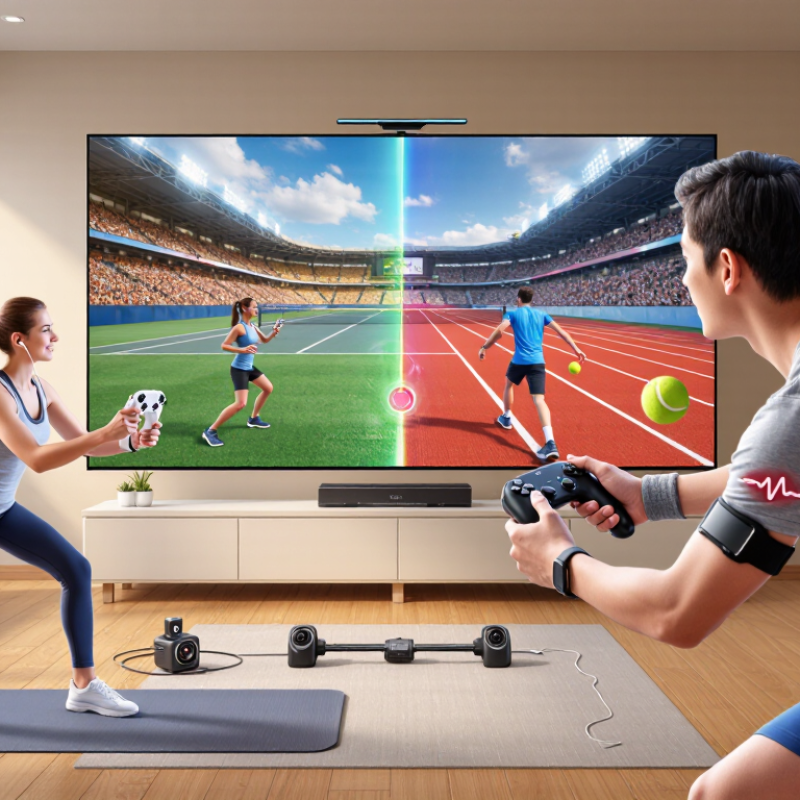
Interactive Sport Games bring athletic movement, digital competition, and real-time feedback into one playable experience. A player may swing a motion controller, track a virtual ball, or race through a headset-controlled stadium. Cameras, accelerometers, heart-rate sensors, and computer vision collect physical inputs. Game software then converts those inputs into on-screen actions, scores, and adaptive challenges. The process feels immediate: a wrist turn changes a tennis shot, while a faster step can increase a virtual runner’s speed.
The market is substantial, although different reports define it differently. Newzoo’s 2024 Global Games Market Report estimates 3.42 billion players worldwide and approximately $187.7 billion in annual game revenue. That scale helps explain why sports publishers are investing in realistic physics, online multiplayer, and connected fitness features. Deloitte’s 2024 Digital Media Trends also describes gaming as a significant social and entertainment activity, particularly among younger audiences. These findings support the industry’s direction, but they do not prove that every InterActive Sport Games product improves health or athletic skill. That assumption needs testing.
Effective design depends on accurate tracking, responsive controls, fair competition, and clear privacy practices. A living-room camera should distinguish a deliberate squat from a loose hand movement. A wearable should display useful feedback without overwhelming the player. Accessibility matters too, because limited mobility should not automatically exclude participation. The category remains imperfect. Some experiences imitate sport convincingly; others mainly reward repeated button presses. Understanding that difference is essential for evaluating how these games work, where they create genuine engagement, and where marketing claims may move faster than evidence.
Definition and Core Features of Interactive Sport Games
Interactive sport games are digital experiences that let players influence athletic action in real time. They may simulate football, racing, tennis, fitness, or mixed-reality training. Unlike passive sports viewing, these games require continuous input. Players move controllers, touch screens, use motion sensors, or make tactical decisions.
Their core features include responsiveness, competition, feedback, and measurable progress. A virtual serve should react differently to timing, angle, and force. Clear feedback then shows accuracy, speed, stamina, or positioning. Multiplayer modes add cooperation and rivalry, while adaptive difficulty keeps challenges suitable for different abilities.
Newzoo’s 2024 Global Games Market Report estimates 3.42 billion people play games worldwide. Its reported global games revenue reached about 187.7 billion dollars in 2024. These figures show a broad audience for interactive formats, but they do not prove every sports game creates meaningful exercise. That distinction matters. A game can imitate movement without producing strong physical activity.
Tips: Check input quality, accessibility options, and privacy controls before choosing a game. For active play, use enough space and keep the floor clear. Industry research from the World Health Organization links regular physical activity with major health benefits, yet entertainment software should not replace professional health guidance. Developers should explain scoring systems and data collection plainly. Players also need visible rest prompts, especially during long sessions. One design flaw remains common: flashy feedback can distract users from technique. Careful testing with beginners, experienced players, and people with disabilities can reveal that problem.
Main Technologies Behind Interactive Sport Games
What Are Interactive Sport Games and How Do They Work?
Main Technologies Behind Interactive Sport Games
Interactive sport games combine physical movement with digital feedback. Players may swing, step, throw, or balance in front of a screen. Sensors track these actions and send movement data to the game engine. Some systems use cameras to estimate body positions. Others use motion controllers, pressure mats, or wearable devices. Each method has strengths and limits.
Computer vision identifies joints, direction, and speed from video images. Motion sensors can measure rotation more precisely. Pressure sensors detect foot placement and weight changes. The software compares this information with the game’s rules. It then adjusts the virtual opponent, score, or training task within milliseconds. The timing matters. A delayed response can make a clean movement feel inaccurate.
Haptic technology adds vibration or resistance to physical actions. Audio cues also help players react without watching every detail. Artificial intelligence can adapt difficulty by studying repeated movement patterns. This may support beginners, athletes, and users with different physical abilities. However, the system does not understand every movement correctly. Loose clothing, poor lighting, and crowded rooms can affect tracking. During testing, small calibration errors sometimes changed the result. That weakness deserves attention, especially when players trust performance data. Secure data handling also matters because movement records can reveal personal habits. Clear settings should explain what is collected and why.
What Are Interactive Sport Games and How Do They Work? - Main Technologies Behind Interactive Sport Games
| Technology | How It Works | Main Inputs | User Experience | Typical Applications | Important Considerations |
|---|---|---|---|---|---|
| Motion Sensors | Accelerometers and gyroscopes detect movement, speed changes, tilt, and rotation, then convert the signals into game actions. | Body movement, controller movement, rotation, and impact. | Players control virtual actions through swings, steps, turns, or gestures. | Racket sports, boxing, skiing, fitness, and balance-based games. | Calibration, sensor placement, sampling rate, and motion accuracy affect responsiveness. |
| Computer Vision | Cameras analyze images or video to identify body position, gestures, objects, and movement patterns without requiring physical controllers. | Video frames, body landmarks, posture, and object location. | Players interact using their body, facial movements, or real sports equipment. | Home fitness, virtual coaching, dance, football drills, and motion-controlled games. | Lighting, camera angle, background clutter, privacy, and occlusion can influence recognition quality. |
| Wearable Devices | Devices worn on the wrist, chest, waist, or limbs collect movement and physiological signals and transmit them to the game system. | Steps, heart rate, acceleration, location, and sometimes muscle activity. | The game can adjust difficulty, scoring, pacing, or feedback based on player performance. | Training simulations, fitness challenges, rehabilitation, and performance tracking. | Comfort, battery life, wireless reliability, data permissions, and measurement limits are important. |
| Force and Pressure Sensors | Pressure-sensitive surfaces or load cells measure force distribution, contact, weight transfer, or impact intensity. | Foot pressure, grip force, landing force, and contact points. | Players receive feedback based on balance, timing, strength, or the accuracy of physical contact. | Balance boards, cycling trainers, golf practice, and rehabilitation exercises. | Sensor durability, safe load limits, surface stability, and consistent calibration are required. |
| Virtual Reality | A head-mounted display renders separate images for each eye and tracks head or hand movement to create an immersive three-dimensional environment. | Head orientation, hand position, controller movement, and virtual environment data. | Players perceive themselves inside the sporting environment and interact with virtual objects. | Virtual batting, shooting, rowing, boxing, and sports training simulations. | Low latency, stable tracking, field of view, motion comfort, and physical play space matter. |
| Augmented Reality | Digital graphics, instructions, or opponents are layered onto the real environment through a screen or optical display. | Camera images, device position, surface information, and player movement. | Players remain aware of the physical space while receiving real-time digital guidance or challenges. | Outdoor sports challenges, coaching overlays, interactive events, and location-based games. | Accurate spatial mapping, sunlight conditions, device performance, and user safety are key factors. |
| Haptic Feedback | Vibration, resistance, or force-feedback mechanisms simulate contact, impact, surface texture, or equipment response. | Game events, collision data, force values, and timing signals. | Players feel when they strike an object, collide, lose balance, or complete an action. | Racing, combat sports, racket sports, training equipment, and accessibility-focused games. | Feedback strength, timing, ergonomic design, noise, and safe force limits need careful control. |
| Real-Time Game Engines | Software processes sensor data, applies game rules, updates physics and graphics, and produces immediate responses. | Sensor signals, player commands, physics models, and programmed rules. | Actions, scores, animations, opponent behavior, and feedback change continuously during play. | Nearly all interactive sports games, from simple motion games to immersive simulations. | Frame rate, processing power, physics accuracy, input latency, and software stability affect quality. |
| Artificial Intelligence | Algorithms interpret player behavior, estimate skill, control virtual opponents, and personalize challenges or coaching. | Player actions, performance history, timing, accuracy, and game context. | Opponents and training tasks can respond dynamically to the player’s ability and decisions. | Adaptive coaching, opponent behavior, skill assessment, and personalized fitness programs. | Training data quality, fairness, transparency, privacy, and predictable behavior should be considered. |
| Wireless Connectivity | Short-range or network connections transfer controller, wearable, and multiplayer data between devices and game services. | Movement data, player states, scores, voice communication, and synchronization signals. | Multiple players can compete or cooperate while devices remain synchronized. | Multiplayer matches, connected fitness, remote coaching, and shared virtual spaces. | Latency, interference, bandwidth, connection security, and offline functionality influence reliability. |
How Players Interact with the Game Environment
Interactive sport games turn player movement into real-time game input. Motion sensors, cameras, controllers, and pressure systems track actions such as swinging, kicking, or sprinting. The software then changes the virtual environment within milliseconds. A missed step may shift the player’s position. A stronger swing may alter the ball’s speed. This creates a feedback loop between body and screen. It feels physical.
The 2024 Essential Facts report from the Entertainment Software Association found that 61% of Americans play video games. Its data also placed the average player age at 36. This broad audience helps explain the demand for sport experiences that combine exercise, competition, and accessible controls. Newzoo’s 2024 Global Games Market Report estimated more than 3.4 billion players worldwide. Interactive sports therefore need simple entry points, but they also require accurate tracking for skilled users.
The environment does more than display scenery. It reads timing, direction, distance, and sometimes balance. Audio cues can signal a nearby opponent. Vibration can warn players before a collision. A bright floor marker can guide a beginner’s next step. Small delays still matter. A tracking error can make a fair match feel broken. Designers should test different body types, lighting conditions, and mobility levels. The system may work perfectly in a laboratory, yet behave differently in a crowded living room. That gap deserves more attention.
Different Types of Interactive Sport Games
Interactive sport games combine physical movement with digital feedback. Motion-controlled games track a player’s arms, legs, or body position through sensors and cameras. The system then converts those movements into actions on screen, such as swinging a racket or kicking a ball. A short delay can make the game feel unnatural. Calibration matters.
Virtual reality sport games place players inside a computer-generated arena. Headsets show changing viewpoints, while handheld controllers measure direction and force. These games can simulate batting, skiing, boxing, or archery. The experience feels immediate. However, limited space may restrict movement, and beginners can lose balance if the session becomes too intense.
Augmented reality sport games add digital targets or opponents to a real room. Players might move around a garden while following illuminated markers on a phone or headset display. Exergames focus more directly on exercise, using timed routines, repetitions, and heart-rate feedback. Competitive online sport games use networked players, rankings, and shared match rules, but they depend heavily on stable connections. Simulation games emphasize realistic physics, ball speed, player positioning, and tactical decisions. Some types overlap. A virtual reality game can also be an exergame, while an augmented reality game may include online competition. That overlap makes classification useful, but not perfectly precise.
What Are Interactive Sport Games and How Do They Work?
Representative energy intensity of movement patterns commonly used in different interactive sport game types
Interactive sport games use body movement, balance, hand gestures, or specialized controllers as input. The chart compares representative metabolic equivalent values (METs) for related physical activities. A higher MET value indicates greater energy expenditure during the activity. Actual intensity varies with speed, skill level, and duration.
Benefits, Challenges, and Future Development
Interactive sport games turn movement into game input. Cameras, motion sensors, or connected controllers track a player’s swing, step, jump, or balance. Software converts that action into points, timing feedback, and changing challenges. A living room can become a small court. The system works best when tracking feels immediate and instructions remain simple.
Their strongest benefit is accessible activity. The World Health Organization’s Global Status Report on Physical Activity 2024 estimates that 31% of adults worldwide were insufficiently active in 2022. Interactive play cannot replace coaching or medical care, but it can reduce the barrier to starting. Short matches may encourage repeated movement, especially for beginners and home users. The evidence is mixed. Calorie estimates can be inaccurate, and points may reward speed over safe technique. Designers should provide rest prompts, adjustable intensity, and clear privacy controls. Without these details, engagement can become pressure.
The challenges are practical and social. Poor lighting can disrupt camera tracking. Small rooms limit safe movement. Motion data also deserves careful handling. IDC’s Worldwide AR/VR Headset Tracker reported a 67.4% year-on-year shipment decline in Q1 2024, signaling hardware friction and uncertain demand. Future development should favor lighter equipment, better calibration, and cross-device access. Newzoo’s 2024 Global Games Market Report estimated about 3.4 billion players worldwide, yet reach does not guarantee healthy activity. Fun is not proof.