Top 10 Shiatsu Neck And Back Massagers for Global Buyers

Home wellness is no longer a niche purchase. It now competes with professional treatment, gym recovery, and everyday stress management. The Global Wellness Institute reported that the global wellness economy reached $5.6 trillion in 2022. Its 2024 Wellness Economy Monitor projects continued expansion through 2027. That growth helps explain rising interest in practical devices for home use.

Grand View Research’s massage equipment market analysis identifies convenience, aging consumers, and self-care habits as major demand drivers. However, market growth does not guarantee product quality. A heated cushion can feel comforting, yet poor pressure control may create discomfort after ten minutes. Real buyers need more than attractive packaging.

This guide examines the Top 10 Shiatsu Neck And Back Massagers for Global Buyers. It compares kneading motion, heat settings, coverage, controls, portability, noise, warranty support, and electrical compatibility. These details matter when a product travels from Tokyo to Toronto, or from a small apartment to a busy clinic.

Tokujiro Namikoshi, the founder of Namikoshi Shiatsu, described the principle this way: “The heart of shiatsu is like a mother’s love.” The phrase sounds simple. It emphasizes care, sensitivity, and whole-person attention rather than force alone.

A reputable massager should support comfort, not promise medical cures. It should also include clear safety instructions and realistic usage limits. Evidence remains uneven across consumer devices. That is worth admitting.

Some rankings may still reflect personal preferences. Shoulder width, body shape, pain sensitivity, and seating position change the experience. Therefore, this selection focuses on transparent comparisons, documented specifications, and practical buyer experience. The best Shiatsu Neck And Back Massager is not always the strongest model. It is the one that fits the user’s body, routine, and expectations.
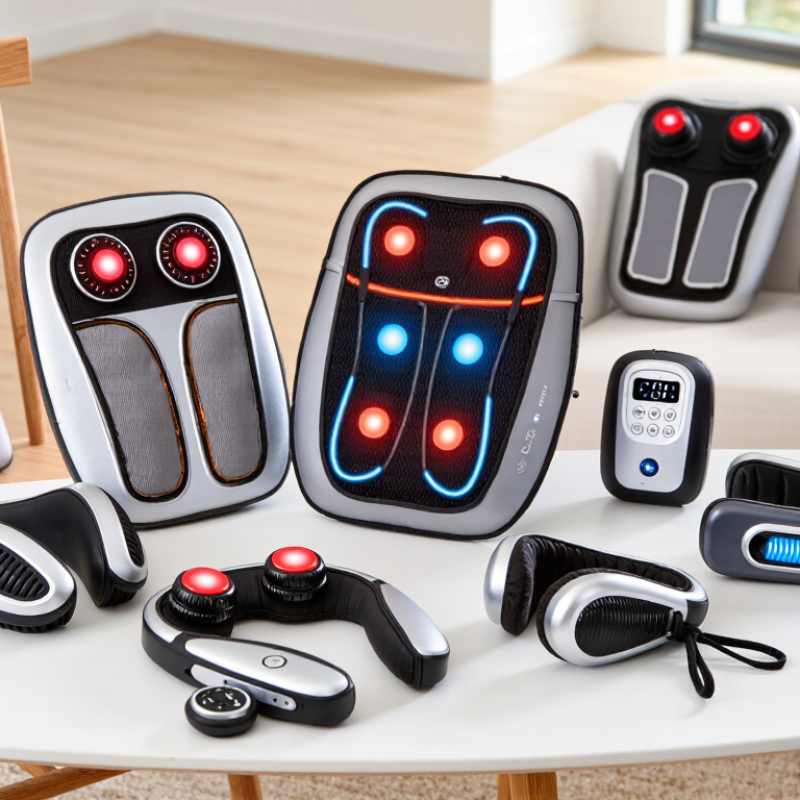
Top 10 Shiatsu Neck And Back Massagers for Global Buyers

What Shiatsu Neck and Back Massagers Are and How They Work

Shiatsu neck and back massagers are compact devices inspired by Japanese finger-pressure massage. They use rotating nodes to imitate kneading, pressing, and circular hand movements. Some models include gentle heat, which may help muscles feel less stiff after desk work or travel. The nodes usually move beneath a padded cover, creating pressure along the shoulders, upper back, or lower back. The sensation can feel deep and focused. It should not feel sharp, numb, or painfully intense.

Tips: Start with the lowest setting for five minutes. Keep the neck supported and avoid placing pressure directly on the spine. Check the heat with your hand first. People with recent injuries, reduced sensation, circulation problems, or ongoing pain should ask a qualified healthcare professional before use. Never treat a massager as a cure.

Practical use reveals an important detail: positioning changes everything. A small shift can move pressure from the shoulder muscle to a tender bone. I have found that shorter sessions often feel better than forcing strong pressure. That observation is not universal. Body shape, muscle tension, and personal tolerance all differ. Buyers should check adjustable intensity, automatic shutoff, washable covers, and the device’s power requirements for their country. A quiet motor also matters during evening use. Relaxation may come gradually.

Key Features for Comparing Shiatsu Massagers Worldwide

For global buyers, comparing Shiatsu neck and back massagers requires more than counting massage nodes. Fit, pressure control, heat, and coverage matter most. A curved backrest should support the lumbar area without forcing the shoulders forward. Adjustable intensity helps users manage tenderness, especially after long desk hours. Heat should feel warm, not sharp or excessive.

The World Health Organization reports that low back pain affected 619 million people in 2020. It may reach 843 million by 2050. This figure explains the demand for practical home-care devices, but it does not prove every massager is suitable. The Global Wellness Institute valued the wellness economy at $5.6 trillion in 2022. However, wellness reports use broad categories, so market comparisons can be imperfect. Buyers should examine independent testing, warranty terms, electrical compatibility, and clear safety instructions. A quieter motor may also matter in bedrooms or shared offices.

Tips: Check voltage and plug standards before importing. Look for removable, washable covers and a timer function. Test the strongest setting carefully. More pressure is not always better. People with persistent pain or medical conditions should seek professional advice before regular use. A useful comparison table should record node movement, heat range, chair fit, noise, controls, and after-sales support. Personal comfort remains subjective, and I would not treat one favorable review as reliable evidence.

Top 10 Shiatsu Neck and Back Massagers for Global Buyers

The comparison index evaluates anonymous market models using five practical criteria: massage coverage, heat function, intensity control, portability, and user controls. Scores are normalized on a 100-point scale from commonly published product specifications; they are intended as a neutral buying framework rather than a brand ranking.

Higher scores indicate stronger overall suitability for international buyers. Check the voltage, plug type, warranty coverage, product weight, and safety certification before purchasing.

Top 10 Shiatsu Neck and Back Massagers for Global Buyers

Choosing among the top 10 Shiatsu neck and back massagers for global buyers requires more than counting massage modes. A dependable comparison should examine pressure, heat control, noise, fabric comfort, and long-term handling. In practical use, firm rotating nodes may ease tight shoulders after desk work, while softer movement suits sensitive users. Heat should feel warm, not painfully hot. Auto shutoff matters during evening sessions.

A useful top 10 list should also consider body shape and seating position. Some devices fit a narrow neck well but press awkwardly against broader shoulders. Others support the lower back better when placed on a chair. Buyers should check product dimensions, weight, washable covers, voltage, and plug compatibility before ordering internationally. Local electrical safety requirements may differ, so official specifications deserve careful attention. Avoid placing strong pressure directly on the spine or the front of the neck.

No ranking is perfect. A massager that feels excellent to one person may feel too intense to another. People with recent injuries, numbness, circulation concerns, or persistent pain should seek qualified medical advice before use. I would also question vague claims about “deep healing” or guaranteed results. Clear instructions, responsive customer support, and transparent warranty terms usually indicate a more reliable purchase. The best choice is not always the most powerful one. It is the device that fits the user’s body, routine, and safety needs.

Power, Plug, and Compatibility Considerations Across Countries

Ashiatsu neck and back massager is not globally compatible by default. IEC 60038 identifies common household supplies around 100–127 volts and 220–240 volts. Frequency also varies between 50 and 60 hertz. Buyers should match the device label with the destination country before ordering. A plug adapter changes the socket shape. It does not convert voltage.

The International Energy Agency’s Electricity 2024 report expects global electricity demand to rise by about 4% annually through 2026. That growth does not mean every home has identical power quality. Voltage fluctuations can affect heating elements, motors, and charging circuits. Choose a model with clearly stated input ranges, such as 100–240V and 50/60Hz. Detachable power supplies are easier to replace. Check the fuse rating, grounding design, and local safety markings.

In cross-border testing, small details often cause the biggest problems. A two-pin plug may not fit a recessed socket. A travel adapter may become warm during a 20-minute massage. That deserves attention. The World Health Organization’s Global Report on Traditional and Complementary Medicine notes that 170 of 194 member states reported using such practices. Demand is international, but electrical standards remain local. I would not rely only on marketplace descriptions. Compare the rating label, manual, warranty coverage, and return process. Compatibility claims can be incomplete.

Safety, Maintenance, and Proper Use of Shiatsu Massagers

A shiatsu neck and back massager can feel useful after long desk work, but pressure is not automatically therapeutic. Sit upright, place the cushions over broad muscle areas, and begin with the lowest intensity. Keep the device away from the front of the neck, spine, joints, and irritated skin. Ten to fifteen minutes is usually enough for one session. Short sessions work better.

Stop immediately if you notice sharp pain, numbness, tingling, unusual swelling, or dizziness. Do not use the massager while sleeping, driving, or standing without support. People with recent injuries, reduced sensation, circulation problems, implanted medical devices, or pregnancy should ask a qualified healthcare professional before use. A clinician can identify risks that a product manual cannot. I have sometimes assumed stronger pressure meant better relief, but that judgment was careless; soreness afterward may signal excessive force, not progress.

Unplug the unit before cleaning. Wipe its cover with a slightly damp, soft cloth, then let it dry fully. Never immerse the motor housing or pour liquid into openings. Check the power cord, stitching, and heat function regularly. A cracked cable needs replacement, not tape. Allow the device to cool before storing it in a dry, shaded place. Keep it away from pets, children, and heavy objects. Read the instructions each time the model changes, because settings and safety limits are not always identical.

Top 10 Shiatsu Neck and Back Massagers for Global Buyers: Safety, Maintenance, and Proper Use

Comparison of common shiatsu massager formats for international buyers. Specifications are typical design ranges and may vary by model. Always follow the supplied user manual and local electrical-safety requirements.
Rank Massager Profile Primary Coverage Typical Shiatsu Mechanism Heat Function Intensity Control Typical Session Limit Suitable Use Key Safety Guidance Maintenance and Cleaning Global Buyer Check
1 Full-Back Shiatsu Massage Cushion Upper back, mid-back, and lower back Rotating kneading nodes that travel vertically along guide tracks Optional localized warmth; use only at a comfortable temperature Usually 2–3 speed or pressure settings Commonly 15 minutes per session Office chairs, recliners, and household seats with adequate back support Keep the device on the back muscles rather than directly over the spine. Do not use while sleeping or driving. Unplug before cleaning. Wipe with a slightly damp cloth; do not immerse or use solvents. Confirm chair dimensions, plug type, rated voltage, and required adapter before purchase.
2 Neck and Shoulder Shiatsu Pillow Neck sides, upper shoulders, and trapezius muscles Compact paired rotating nodes in a contoured cushion Often includes gentle surface heating Usually controlled by a handheld switch or wired controller Commonly 10–15 minutes per session Targeted relaxation while seated or reclining Use on the back and sides of the neck only. Avoid the throat, front of the neck, and direct pressure on bony areas. Remove detachable covers if washable according to the care label. Keep the motor housing dry. Check pillow size, neck fit, fabric care instructions, and whether the controller language is understandable.
3 Portable Neck-and-Back Wrap Neck, shoulders, lumbar area, or upper back Flexible wrap containing small rotating massage heads May provide low-level heat; discontinue if skin becomes excessively warm Typically low and high settings, sometimes with direction control Usually 10–15 minutes per session Travel, home, and short seated sessions Do not tighten the wrap enough to restrict breathing, circulation, or normal movement. Do not use over injured or inflamed tissue. Store flat or loosely rolled. Clean fabric surfaces with a soft damp cloth and allow them to dry fully. For air travel, check battery rules and carry-on requirements. Verify charging voltage and connector compatibility.
4 Seat-Top Back and Lumbar Massager Mid-back, lower back, and lumbar muscles Fixed or moving kneading nodes mounted in a seat pad Heat is commonly focused on the lower back Often includes adjustable speed, zone selection, or vibration levels Commonly 15 minutes with automatic shutoff Desk chairs, dining chairs, and vehicle seats when safely parked Never operate while driving. Secure the pad so it cannot interfere with pedals, seat belts, or vehicle controls. Inspect straps and cables regularly. Keep dust away from ventilation openings and never cover the motor vents. Measure the seat and backrest. Confirm the product is designed for the intended chair or vehicle seat.
5 Deep-Kneading Lumbar Cushion Lower back and waist muscles Compact rotating nodes with concentrated pressure Usually optional heat for the lumbar region Generally one or two pressure settings Typically 10–15 minutes per session Short, targeted sessions for users who prefer firm pressure Start at the lowest intensity. Stop if there is sharp pain, numbness, tingling, bruising, or worsening discomfort. Do not fold sharply while operating. Check seams, casing, and power cord for wear before each use. Check the cushion dimensions, return policy, electrical certification information, and local warranty coverage.
6 Adjustable Shoulder and Neck Massager Upper shoulders, shoulder blades, and neck muscles Two or more rotating node pairs with adjustable hand straps Some models provide switchable warming Pressure can be adjusted by changing hand or strap tension Usually 10–15 minutes per session Users who want manual control over pressure and placement Keep pressure moderate and symmetrical. Avoid pulling the device tightly around the neck or placing it over the throat. Wipe handles and fabric contact areas after use. Do not use bleach, abrasive cleaners, or excess water. Review strap length, total weight, controller design, and whether the instructions use a language you can read.
7 Recliner-Style Full-Body Cushion Neck, shoulders, back, and sometimes seat or thighs Multiple massage zones with moving back nodes and separate vibration areas Heat may be limited to selected back zones Often offers zone selection and several intensity levels Commonly 15 minutes with automatic shutoff Recliners and large chairs with stable back support Use only on a stable chair. Avoid excessive reclining if it changes the device position or increases pressure on the spine. Vacuum or brush fabric gently. Keep liquids, food, pets, and sharp objects away from electrical components. Measure the chair carefully and check maximum user weight, cable length, voltage, and plug configuration.
8 Cordless Rechargeable Neck Massager Neck, upper shoulders, and upper back Battery-powered rotating or pulsing massage nodes Heat may be absent or limited because of battery capacity Usually two or three intensity levels Often 10–15 minutes per session; runtime depends on battery capacity Short sessions away from a wall outlet Use the supplied charger or an approved equivalent. Stop using the unit if the battery becomes swollen, unusually hot, or damaged. Keep charging contacts dry. Store in a cool, dry location and avoid leaving the device in a hot vehicle. Check battery chemistry, charging time, USB or charger requirements, transport restrictions, and replacement-battery availability.
9 Dual-Zone Neck and Back Pad Neck and lower back, or upper and lower back zones Separate massage areas that can operate together or independently Heat commonly operates in one or both selected zones Zone selection plus low, medium, or high intensity Typically 15 minutes with automatic shutoff Users who want focused treatment without full-body coverage Use one zone first to assess tolerance. Avoid placing massage nodes over the spine, kidneys, joints, or areas with reduced sensation. Follow the fabric-care label. Examine detachable controls and cable connections for moisture or damage. Confirm whether both zones can operate simultaneously and check the product's total power requirement.
10 Compact Travel Shiatsu Cushion Small areas of the neck, shoulders, or lower back Small rotating nodes in a lightweight, foldable cushion Heat may be optional or unavailable Usually basic on/off and one or two intensity settings Commonly 10–15 minutes per session Hotels, dormitories, offices, and occasional travel use Use on a firm, stable surface and maintain a comfortable posture. Do not place the cushion under the body or sleep on it. Allow the unit to cool before packing. Keep it dry, avoid tight bending, and store the cable without sharp kinks. Check folded dimensions, carry case availability, plug adapters, voltage range, and local after-sales support.
General safety note: Shiatsu massagers are intended for relaxation and temporary muscle comfort, not for diagnosing or treating medical conditions. People who are pregnant, have a pacemaker or other implanted device, have circulation problems, reduced skin sensation, osteoporosis, recent surgery, open wounds, fractures, or unexplained pain should seek advice from a qualified healthcare professional before use. Stop immediately if discomfort, dizziness, skin irritation, numbness, or sharp pain occurs.