China Top 10 Multi Effects Pedal Manufacturers
China’s guitar-effects industry includes established brands, specialist designers, and factories serving international customers. This guide introduces ten Chinese Multi-effects pedal manufacturers and the differences buyers may notice between them. A compact pedal can combine amp models, modulation, delay, and reverb, but the feature list only tells part of the story. Screen readability, footswitch spacing, menu depth, and output noise matter during real rehearsals.
The comparison considers product range, manufacturing capabilities, customization options, and practical details that can be checked with each supplier. Some companies focus on ready-to-use branded products; others emphasize OEM or ODM production. Those approaches are not interchangeable. A factory’s capacity, component choices, quality-control process, and after-sales support deserve direct questions before a purchase decision. Details matter. Product pages can look polished, while hands-on usability remains harder to judge without a demo or sample. This guide is a starting point, not a guarantee of performance. Buyers should verify current specifications, request clear documentation, and test sounds with their own guitar and amplifier when possible. Even small differences in latency, switching behavior, or preset navigation can change a player’s experience. The shortlist aims to make research more focused, while recognizing that no single manufacturer suits every budget, playing style, or production plan.
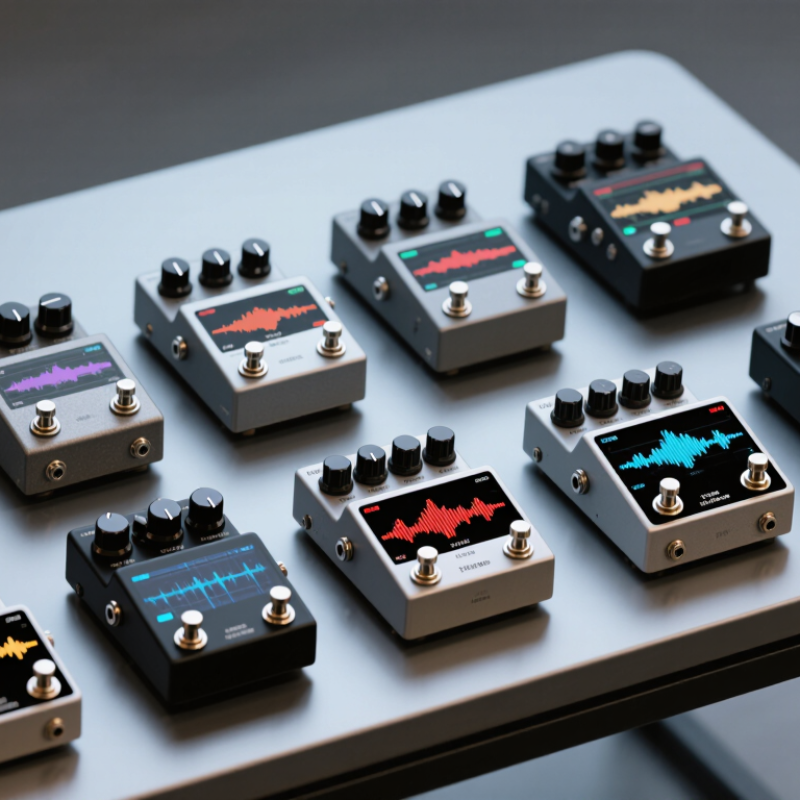
Table of Contents [Hide]
How Multi-Effects Pedals Shape Modern Guitar Setups
Multi-effects pedals have changed how guitarists build a working setup. One compact unit can hold an amp simulation, delay, modulation, and several saved sounds. That means fewer separate pedals, shorter cable runs, and less time spent untangling a crowded board. At rehearsal, a player can switch from a dry, edge-of-breakup tone to a spacious lead sound with one foot press. The change is practical, not just flashy. It can make quick set changes easier, especially when stage space is tight.
Modern setups still need careful choices. A preset that sounds rich through headphones may feel sharp through a loud cabinet. Small adjustments to output level, cabinet simulation, or equalization can matter more than adding another effect. Preset switching can also create an awkward pause if sounds are poorly balanced. That matters. Spend time matching levels at rehearsal volume, and keep essential sounds easy to reach. Too many options can slow a guitarist down; even experienced players sometimes build patches they rarely use. A simple signal chain and a few well-tested presets often serve a performance better than an elaborate menu of effects.
| No. | Dimension | Common implementation | Impact on a guitar setup | Practical consideration |
|---|---|---|---|---|
| 1 | Digital signal processing | A digital processor runs effects algorithms, amp models, or both; processing capacity varies by product. | Combines multiple tones and effects in one floor unit, reducing the need for separate pedals. | Available processing power can affect how many effects run simultaneously and how complex the signal chain can be. |
| 2 | Effect selection and routing | Units may offer categories such as modulation, delay, reverb, dynamics, and overdrive, with serial or parallel routing on some models. | Lets players build and save signal chains for different songs, instruments, or performance situations. | Check whether effect order is fixed or editable and whether the desired blocks can be used together. |
| 3 | Amplifier and cabinet simulation | Some pedals model amplifier behavior and cabinet or speaker responses; others focus on effects only. | Can provide a direct guitar signal for recording, headphones, or a PA system without a conventional amplifier in the signal path. | When connecting to a guitar amplifier, cabinet simulation may need to be bypassed or configured for that setup. |
| 4 | Input and output connections | Common connections include a guitar input and audio outputs; stereo outputs, effects loops, and MIDI connections are available on some units. | Determines whether the pedal can fit into mono or stereo rigs and integrate with other stage or studio equipment. | Match the connections and signal levels to the amplifier, audio interface, or PA equipment being used. |
| 5 | Preset and patch management | Many units store user-created settings as presets, with the number and organization varying by model. | Allows players to recall complete tones quickly instead of adjusting several individual controls between songs. | Consider how presets are selected on stage and whether the editing workflow suits the player. |
| 6 | Footswitches and expression control | Footswitches commonly select presets or toggle effects; an expression pedal or external control input may be supported. | Enables hands-free changes such as switching tones, controlling volume, or adjusting a mapped effect parameter. | Confirm which controls are built in and which require an optional external controller. |
| 7 | Latency and signal response | Digital units convert and process the incoming signal; actual latency depends on the design and signal path. | Low perceived latency helps the processed sound feel responsive during playing. | Test the complete signal chain when possible, especially when using several digital devices together. |
| 8 | USB and recording functions | Some pedals support USB for preset editing, firmware updates, or audio recording; capabilities differ by model. | Can simplify home recording and tone editing by connecting the unit to a computer. | Check supported operating systems, driver requirements, and whether USB carries audio or only data. |
| 9 | Power and portability | Pedals use model-specific power requirements and may be designed for a pedalboard, desktop use, or both. | A compact multi-effects unit can replace several separate pedals and reduce setup and transport complexity. | Verify voltage, polarity, current requirements, and power-supply compatibility before connecting it to a board. |
| 10 | Enclosure and quality checks | Production evaluation commonly considers enclosure fit, switch and jack operation, control consistency, and electrical performance. | Reliable controls and connections matter for repeated setup, transport, and live use. | Assess build quality and warranty support for the specific product rather than assuming all units share the same standards. |