What Are the Top Sound Bowl Instrument Types in 2026?
In 2026, sound bowls are available in several forms, each with a distinct material, feel, and sound. This guide explores popular Sound Bowl Instrument types, including traditional metal singing bowls, quartz crystal bowls, and newer variations in shape and finish. The word “top” does not mean one bowl is best for everyone. It depends on how you plan to use it, what sound you enjoy, and how much space you have.
The differences matter. Metal bowls often produce layered tones that can change with the striker and playing technique. Crystal bowls typically create clear, sustained notes, though their sound and handling needs vary by size and design. Some bowls are made for gentle tapping; others respond to a steady circular motion around the rim. Listening in person can reveal details that product descriptions miss. Not always.
This overview compares common types by construction, sound characteristics, portability, care, and practical buying considerations. It also separates observable features from claims that may be difficult to verify. A bowl can feel calming to one listener and distracting to another; no instrument guarantees a particular health outcome. Small details count: the room’s acoustics, the player’s technique, and even the striker’s material can change what you hear. There is room for personal preference, and some distinctions are less clear-cut than listings suggest. The aim is to help readers make a considered choice, not to declare a universal winner.
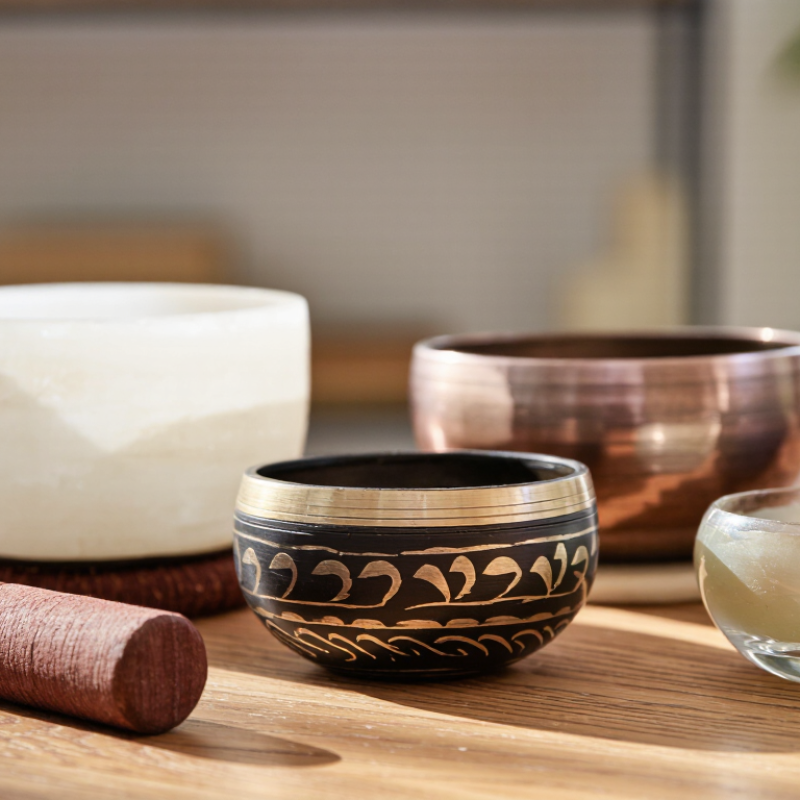
What Sound Bowl Instruments Are and How They Produce Resonance
Sound bowls are resonant vessels, commonly made from metal alloys or fused silica crystal. A striker excites the bowl’s body, while a mallet moving around its rim can sustain vibration. Shape, thickness, and material create overlapping acoustic modes, so the sound is rarely one pure note. You may feel a faint tremor beneath the tone.
Metal bowls often produce layered, wavering partials; crystal bowls can sound brighter, though construction varies. Neither type guarantees a particular pitch or therapeutic result. Small differences matter.
Grand View Research valued the wider sound therapy market at USD 1.6 billion in 2022 and forecast an 8.3% compound annual growth rate through 2030. That category covers more than bowls, so it does not measure bowl sales. A 2017 observational study of 62 adults, published in the Journal of Evidence-Based Complementary & Alternative Medicine, reported lower tension, anxiety, and depressed mood after singing-bowl meditation. This is promising, not proof of clinical treatment. When testing a bowl, listen for a clear onset, steady sustain, and harsh beating. An advertised note may matter less than how the bowl resonates in your room.
Traditional Metal Singing Bowls: Himalayan and Hand-Hammered Types
Traditional Metal Singing Bowls: Himalayan and Hand-Hammered Types
Himalayan singing bowls are associated with musical and contemplative traditions across the Himalayan region. The label does not guarantee one precise recipe or sound. Many traditional metal bowls use copper-based alloys, but composition and proportions can vary. “Hand-hammered” describes how a bowl is shaped: repeated hammer strikes form its body and rim. The categories can overlap. A bowl may be both Himalayan-style and hand-hammered. Labels can be a little slippery.
Sound depends on more than origin or appearance. Bowl size, wall thickness, rim shape, and playing technique all influence pitch and resonance. A compact, thick-walled bowl may give a focused note; a wider bowl may sound lower and fuller. These are tendencies, not rules. Hammer marks can show how the surface was formed, but they do not prove a bowl’s age or sound quality. Listen before choosing.
Tips: Tap gently, then glide a mallet around the rim. Notice whether the tone stays steady and comfortable in the room. Compare bowls at similar volumes, and ask about materials if composition matters to you. A beautiful finish alone tells you little.
Crystal Singing Bowls: Frosted, Clear, and Alchemy Types
Crystal singing bowls are commonly grouped as frosted, clear, and alchemy types, but these labels describe appearance and construction more reliably than sound. Frosted bowls have a matte, textured surface, often created through abrasion. Played gently, many produce a rounded, sustained tone. The finish may make them easier to handle, but it does not guarantee greater volume or a calmer effect. Bowl diameter, wall thickness, mallet material, and room acoustics also shape the note. Small differences matter.
Clear bowls have a smooth, transparent appearance and can produce a bright, ringing sound, though their tone still depends on size and build. Alchemy bowls are generally described as quartz bowls made with added minerals or other materials; exact compositions vary, so check the maker’s specifications rather than relying on color alone. That distinction is imperfect. A practical comparison is to listen to each bowl at a comfortable volume and notice how its resonance feels in your room. Listen before choosing. The “best” type is the one whose sound, handling, and care requirements suit your intended use—not simply the most striking one on display.
What Are the Top Sound Bowl Instrument Types in 2026? — Crystal Singing Bowls: Frosted, Clear, and Alchemy Types
| Type | Typical appearance and construction | Sound characteristics | Common uses | Practical considerations |
| Frosted crystal | Usually made from fused silica (quartz) and has an opaque, matte surface. Bowls are commonly formed with relatively substantial walls, though construction varies by maker. | Often described as full and projecting. The actual pitch, sustain, and volume depend on the bowl’s dimensions, wall thickness, and how it is played. | Group sound sessions, meditation, and settings where a clearly audible tone is useful. | The matte surface can show marks from handling. Use a suitable mallet and avoid striking the rim too forcefully. |
| Clear crystal | Typically transparent or translucent fused-silica glass, with a smooth, polished appearance. Wall thickness and bowl shape vary. | Can produce a bright, ringing tone with audible upper harmonics. Its sound is shaped by size, construction, mallet, and playing technique. | Solo practice, small-group sessions, and combinations with other acoustic instruments. | Transparency makes the bowl’s contents and surface visible, but does not indicate a particular pitch or sound quality. Handle carefully, as quartz glass can chip or break if dropped. |
| Alchemy crystal | A category of crystal bowls made with additional materials incorporated into or applied to the quartz. Additives and finishes vary; some bowls have colored or iridescent surfaces. | There is no single sound profile for this category. Tone and sustain depend on the individual bowl’s composition, dimensions, and construction. | Personal sound collections, meditation, and sessions where a distinctive appearance or individual bowl is preferred. | “Alchemy” is not a standardized material specification. Check the maker’s description for the exact materials and care guidance; appearance alone cannot establish composition or acoustic properties. |
Note: Descriptions such as “bright,” “full,” and “ringing” are subjective. No bowl type guarantees a specific frequency, therapeutic effect, or response; compare individual bowls by listening to them in person or through a reliable recording.
Specialty Sound Bowls: Chakra-Tuned, Planetary, and Hybrid Designs
What Are the Top Sound Bowl Instrument Types in 2026?
Specialty Sound Bowls: Chakra-Tuned, Planetary, and Hybrid Designs
Chakra-tuned bowls are marketed around musical notes associated with different energy centers. Their labels can be useful starting points, but tuning systems vary between makers. Listen for a clear, steady tone rather than relying on color or claims. A bowl’s feel and sound matter.
Planetary bowls are commonly linked to frequencies inspired by astronomical cycles. These associations are interpretive, not proof of a health effect. Ask how the pitch was measured, and check whether the seller shares a tuning reference. Hybrid designs combine materials, shapes, or tonal ranges to create layered sounds. Some blend a bright upper ring with a warmer, lower hum. Small differences matter. A hybrid bowl may sound rich in a large room but feel crowded in a small one.
Tips: Test a bowl in a quiet space, if possible. Strike it gently, then listen as the tone fades. Compare several bowls at the same volume. Listen before buying. Also consider weight, rim shape, and how comfortably you can hold it; these practical details are easy to overlook.
How to Compare Bowl Types by Tone, Material, and Playing Method
What Are the Top Sound Bowl Instrument Types in 2026?
In 2026, compare sound bowls by tone, material, and playing method—not labels alone. Metal bowls, often made from bronze-based alloys, tend to produce layered, warm tones with changing overtones. Quartz crystal bowls usually sound clear and focused, with a sustained note. Size, wall thickness, and shape also affect sound, so material is only part of the story. Small details matter.
Playing method changes the experience. A soft mallet strike gives a brief, rounded note; circling a striker around the rim can build a continuous tone. Metal bowls often respond well to both methods, while some crystal bowls need gentle, even pressure to avoid harsh squeaks. Try different speeds. A bowl that sounds rich in a quiet shop may feel sharp in a small room, so there is no universal winner. These comparisons can be imperfect.
Tips: Ask to hear a bowl struck and rim-played. Notice how quickly its tone fades, whether the vibrations feel comfortable, and whether the striker fits your hand. For group use, choose a sound that stays clear without overwhelming nearby listeners. Recordings help, but rarely capture a room’s full resonance.
What Are the Top Sound Bowl Instrument Types in 2026?
Compare common bowl materials by their typical tonal characteristics.
Ratings are illustrative relative profiles on a 1–5 scale, not laboratory measurements. Hand-hammered metal bowls often have complex, warm overtones; quartz crystal bowls typically produce a clear tone with long sustain. Bowl size, shape, thickness, mallet, and playing technique can substantially change the sound.