China Top Component Terminal Block Manufacturers?
China has a broad supplier base for electrical connection components, including manufacturers of the Component Terminal Block. For buyers, identifying a suitable partner takes more than comparing catalog prices. Product fit depends on practical details: rated current, voltage, wire range, pitch, mounting style, and housing material. A compact screw terminal may suit a control cabinet, while a spring-clamp design can speed up wiring on a busy assembly line.
This guide introduces Chinese manufacturers and the factors that help distinguish them. It looks at product range, customization, production capability, quality procedures, and communication during sampling. Ask for current datasheets, drawings, and test information, then check that the offered specifications match your application. Details matter. A neat product photo cannot confirm clamping performance or long-term reliability. Samples and clear technical discussions can reveal gaps before a larger order is placed.
Manufacturing scale and export experience can be useful, but neither guarantees the right fit. Compare suppliers against the same requirements, and verify claims through documentation and evaluation. No supplier is perfect. Lead times, minimum order quantities, and support after delivery may vary, even when products appear similar. A careful comparison gives engineers and procurement teams a more grounded shortlist of China’s top component terminal block manufacturers—and a clearer view of the trade-offs behind each choice.
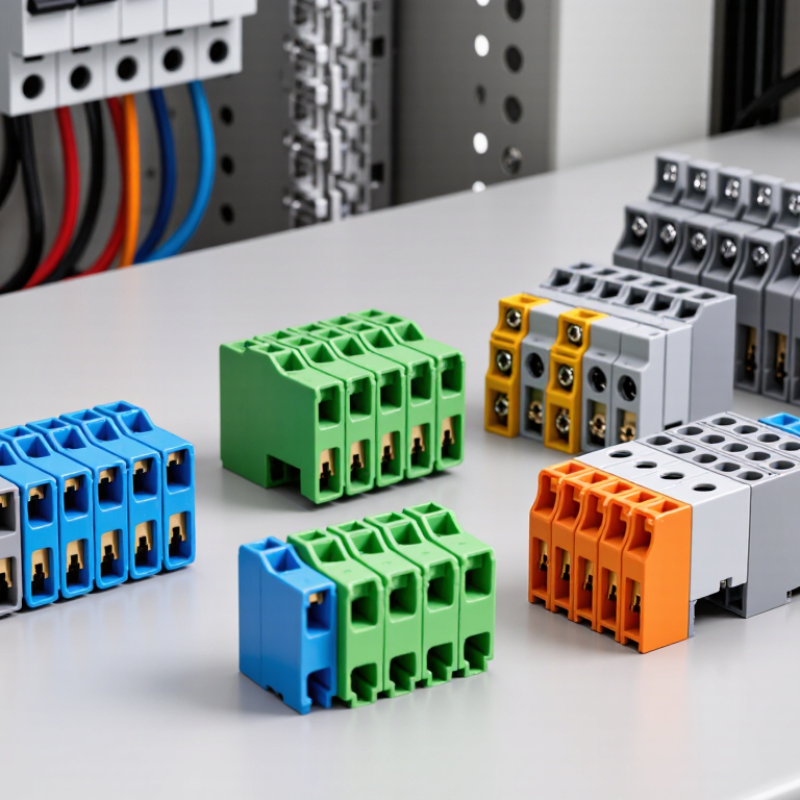
What Are Component Terminal Blocks and Where Are They Used?
What Are Component Terminal Blocks and Where Are They Used?
Component terminal blocks are insulated connectors that join and organize electrical conductors. Common types include feed-through, grounding, fuse, and disconnect blocks. They are installed on DIN rails or circuit boards, depending on the equipment design. Inside a control cabinet, they can connect sensor wires, motor circuits, and power supplies while keeping each connection identifiable. Small parts, real consequences.
These blocks appear in factory automation, building control panels, HVAC systems, renewable-energy equipment, and transportation infrastructure. The scale of electrical deployment helps explain their broad use: the International Energy Agency’s Renewables 2024 report says global renewable capacity additions reached almost 510 GW in 2023. Its Electricity 2024 report projects global electricity demand will grow by an average of 3.4% annually through 2026. More generation and electrical equipment mean more connections to manage, though terminal blocks are only one part of that system.
Selection depends on rated voltage and current, conductor size, temperature, vibration, and enclosure conditions. A block that fits the drawing may still be awkward to wire in a crowded cabinet. Check markings, conductor compatibility, and installation instructions before assembly; screw-clamp connections also need the specified tightening method. That detail is easy to overlook. (Sources: IEA, Renewables 2024; IEA, Electricity 2024.)
How Are Terminal Blocks Classified by Design and Function?
Terminal blocks are classified by connection design and electrical function. Screw-clamp models use a tightened screw to secure stripped wire, while spring-clamp and push-in types rely on spring pressure. Screw connections suit varied wire sizes, but installation torque matters. Push-in designs can speed panel wiring, especially when conductors are prepared correctly. Small details matter.
Functional categories include feed-through blocks for joining conductors, grounding blocks for protective-earth connections, and fuse or disconnect blocks for circuit protection or isolation. Multi-level designs place several circuits in one narrow footprint. IEC 60947-7-1:2019 covers terminal blocks for copper conductors, offering a useful technical reference when comparing ratings and construction. The categories can overlap: a single block may combine disconnect and fuse functions.
Market estimates help explain the range of products.
Grand View Research valued the global terminal block market at about USD 4.22 billion in 2022 and projected a 5.5% compound annual growth rate from 2023 to 2030. These figures describe the market, not product quality.
When evaluating Chinese manufacturers, compare connection type, rated current, wire range, temperature limits, and test documentation. A compact block may save panel space, yet leave less room for inspection. That trade-off is easy to overlook.
How Are Terminal Blocks Manufactured and Tested in China?
Terminal blocks are typically produced through injection molding, metal stamping or machining, and controlled assembly. Manufacturers select housing materials for insulation, heat resistance, and dimensional stability. Copper or brass conductors are cut, formed, and sometimes plated to limit corrosion. Screw clamps or spring mechanisms are assembled to provide reliable contact pressure. Small variations matter.
Quality checks start with incoming materials and continue along the production line. Operators inspect housings for cracks, excess material, and dimensional inconsistencies. Electrical tests can measure contact resistance and insulation resistance. Dielectric testing checks insulation under specified voltage. Pull tests assess whether wires stay secure under a defined force. Temperature-rise tests may expose weak connections, but results depend on the test setup and rated conditions. Periodic sampling helps, but cannot identify every possible defect.
Tips: Ask suppliers for test methods, acceptance criteria, and traceable batch records. Confirm wire size, tightening torque, and operating temperature before comparing products. A neat appearance is useful, but it does not prove dependable performance. I would also ask how rejected parts are handled; this detail is easy to overlook. Use documented results. Avoid relying on claims alone.
Terminal Block Manufacturing and Testing: Conductor Material Benchmark
Electrical conductivity helps manufacturers select and inspect materials for current-carrying parts. Values are representative percentages of the International Annealed Copper Standard (IACS) at 20°C; actual conductivity varies by alloy, grade, and temper. Stainless steel is included for comparison and is generally used for hardware rather than the main current path.
Which Companies Are China's Leading Terminal Block Manufacturers?
Which companies are China’s leading terminal block manufacturers? The answer depends on the application, not just output volume. Strong suppliers typically offer screw, spring-clamp, and plug-in designs, with clear ratings for current, voltage, wire size, and temperature. MarketsandMarkets’ 2023 Terminal Blocks Market report estimated a global market of USD 4.2 billion in 2023, projecting USD 5.3 billion by 2028. That growth reflects demand across industrial control, energy, and building systems, but it does not establish a China-specific ranking. Small details matter.
For buyers, compare manufacturers through test records, production consistency, and documented quality controls. IEC 60947-7-1 provides relevant requirements for terminal blocks used with copper conductors in industrial applications. Ask for temperature-rise and mechanical test results, then check whether the ratings match the intended wire and enclosure. A reliable supplier should also explain material choices and provide traceable product documentation. A polished catalog is not proof. I would treat it as a starting point, not a verdict; supplier audits and sample testing can reveal gaps that brochures miss. China’s leading producers are best distinguished by repeatable performance, responsive engineering support, and evidence that their products meet stated specifications.
How Can Buyers Compare Chinese Terminal Block Manufacturers?
Comparing Chinese terminal block manufacturers takes more than checking unit prices. Buyers should match each supplier’s product range to the actual installation: wire size, rated current, voltage, mounting method, and operating temperature. Ask for technical datasheets and confirm that ratings apply to the exact model being quoted. Small differences matter.
Request samples before placing a large order. Inspect the clamping force, screw movement, plastic finish, and fit on a standard rail. A simple pull test on a wired sample can reveal loose connections, though it cannot replace formal testing. Ask which quality checks are performed on incoming materials and finished products, and request relevant test reports when needed. Details matter.
Compare communication and delivery, too. Can the manufacturer explain material options clearly, provide production lead times, and identify how batches are traced? Confirm packaging, labeling, customization limits, and how defects are handled. A low quote may exclude tooling, inspection, or export packaging, so compare like-for-like costs. Ask for evidence. One point is easy to overlook: a polished sample does not guarantee consistent production. Start with a modest order when practical, review the delivered parts, and record any differences before expanding.