Why Are Cigar Vapes Popular Worldwide?
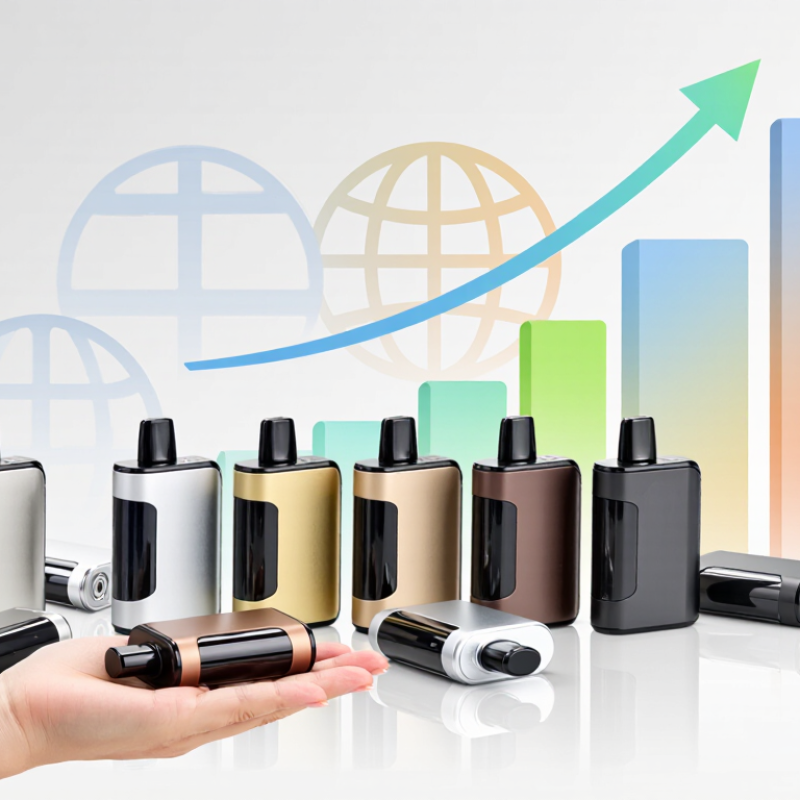
Cigar Vapes have attracted attention by pairing a cigar-inspired shape with the convenience of a compact electronic device. Their appearance can feel familiar, while flavors, finishes, and product formats offer a different experience from traditional cigars. For some adult consumers, portability and a simpler setup may also influence interest. Small details matter: the feel of a device in the hand, its size in a pocket, and how clearly its features are explained.
Market figures offer useful context, but they require careful reading. Grand View Research estimated the global e-cigarette and vape market at USD 28.17 billion in 2023. That figure covers a broad product category; it does not measure Cigar Vapes alone. Still, it suggests substantial commercial activity around vaping products and helps explain why specialized designs receive attention from manufacturers and retailers. It is context, not proof of popularity.
Why do these products appeal across different markets? Design, product choice, retail visibility, and changing consumer preferences may all play a role. Yet popularity is difficult to measure consistently: reports may group cigar-style devices with other vape products, and consumer habits differ between regions. The evidence has limits. A polished design is not evidence of reduced health risk, either. Public-health agencies, including the World Health Organization, warn that vaping products can carry health risks, particularly for young people and people who do not use tobacco. Any discussion of Cigar Vapes should weigh consumer interest against those concerns and rely on transparent, well-sourced data.
What Cigar Vapes Are and How They Work
Cigar vapes are electronic devices designed with the shape or appearance of a traditional cigar. They do not burn tobacco in the same way. Instead, a small battery powers a heating element that warms a liquid into an inhalable aerosol. The name can mislead. It describes the device’s style, not necessarily what it contains.
Inside, a typical device has a battery, a liquid reservoir, and a coil or similar heater. When someone inhales, a sensor or button may activate the heater. The liquid then travels through a wick and is warmed. Depending on the product, it may contain nicotine, flavorings, and other ingredients. Not quite smoke. The aerosol is not simply water vapor, either.
Design and operation vary between devices, so appearance alone cannot confirm their contents or performance. Some have fixed settings; others allow adjustments. Details matter. Nicotine can cause dependence, and inhaled aerosols may expose users to substances that affect health. Evidence about long-term effects is still developing, which makes confident claims about safety unwise. A careful description should explain how the device works without treating its cigar-like look as proof that it behaves like a cigar.
Why Are Cigar Vapes Popular Worldwide? — What They Are and How They Work
How to read this chart: The numbers show the order of the steps, not measured quantities or popularity statistics. Cigar-style vapes are electronic devices shaped to resemble cigars. Their familiar form and portability may appeal to some users, but popularity varies by market. These devices heat e-liquid into an aerosol rather than burning tobacco like a conventional cigar. The aerosol may contain nicotine and is not harmless.
How Their Design Differs from Traditional Cigars
Cigar vapes borrow a cigar’s long, rounded silhouette, but their internal design is different. A typical device uses a battery, heating element, and liquid reservoir; a traditional cigar is rolled tobacco leaf that burns at the lit end. The vape’s mouthpiece may feel familiar, yet there is no ash or burning wrapper. Small details matter: a charging port, airflow opening, or smooth plastic casing can reveal the device’s electronic construction.
The World Health Organization estimated in 2024 that more than 100 million people worldwide use e-cigarettes, including at least 86 million adults. That figure covers e-cigarettes broadly, not cigar-shaped devices specifically. Still, familiar shapes may help explain why manufacturers borrow cigar styling: the format looks recognizable while hiding a very different mechanism. The resemblance can also confuse people. A cigar-like appearance does not mean the device contains a cigar.
The U.S. National Academies’ 2018 review describes e-cigarettes as heating liquid to create an aerosol, rather than burning tobacco. This difference changes what users see and smell, but it does not make the aerosol harmless. Device designs and ingredients vary, and appearances alone cannot identify what a product contains. A glossy barrel may look simple; inside, its battery and heating parts still need careful engineering.
Where Cigar Vapes Have Gained Popularity
Cigar vapes are most visible in places where adult vaping already has an established retail presence, including parts of North America and Europe. Their cigar-like shape can feel familiar to people accustomed to traditional cigars, while compact designs suit quick trips and social settings. In some cities, shoppers may encounter them in specialist stores or regulated online listings. Availability is uneven. Local rules, retail practices, and public attitudes differ widely, so visibility in one city does not prove broad popularity across a country.
Interest also appears in some urban markets across East and Southeast Asia, though access and public acceptance vary considerably. The appeal may come from recognizable styling, portable size, and the perception of a different experience from a standard vape. That perception can be misleading: appearance alone says little about ingredients, nicotine exposure, or product quality. The evidence is patchy. Sales figures and search interest do not always distinguish cigar-shaped devices from other vaping products, making worldwide comparisons difficult. A careful account should treat regional trends as snapshots, not a reliable measure of how many adults use them.
Factors Driving Their Global Appeal
Why Are Cigar Vapes Popular Worldwide?
Cigar vapes appeal to some adults because they combine familiar cigar-inspired shapes with a different, often more portable format. Their smooth casing and hand-held feel can echo traditional cigar rituals. For some users, that visual familiarity matters as much as flavor. Others are drawn to compact designs and ready-to-use convenience. The appeal varies, though, and popularity does not mean a product is risk-free.
Tips: Check whether a product contains nicotine and read its ingredient information. Nicotine can be addictive. Do not assume a cigar-like appearance means a vape is safer than other tobacco or nicotine products. If you do not use nicotine, avoiding it is the lowest-risk choice.
Social trends also influence interest. Online photos and conversations can make distinctive devices seem fashionable, while varied flavors may attract curious adult consumers. Yet descriptions of flavor and experience are subjective; they are not reliable evidence of safety. Product quality and ingredient transparency may also differ, so comparisons can be difficult. That part deserves more scrutiny. Global appeal reflects design, convenience, and social visibility, but informed choices require looking beyond appearance and marketing claims.
Why Are Cigar Vapes Popular Worldwide? - Factors Driving Their Global Appeal
| Factor |
What may attract users |
Global context and important caveat |
| Familiar cigar-like appearance |
A cigar-inspired shape can feel familiar to adults who recognize traditional cigars, while offering a different product format. |
Design preferences vary by culture and individual. Appearance alone does not indicate the product’s ingredients or risk. |
| Convenience and portability |
Compact, self-contained devices can be easier to carry and use than products that require separate accessories or preparation. |
Device designs differ. Disposable versions also create electronic and battery waste, and disposal rules vary between places. |
| No tobacco burning |
Users may be drawn to a device that heats liquid to produce an aerosol rather than burning tobacco like a conventional cigar. |
Vaping aerosol is not harmless and can contain nicotine and other potentially harmful substances. It should not be described as risk-free. |
| Flavor choices |
Where permitted, products may be offered in tobacco-inspired and other flavor profiles, giving consumers options beyond traditional tobacco taste. |
Flavor availability is shaped by local laws. Some jurisdictions restrict or prohibit certain e-cigarette flavors. |
| Perceived ease of use |
Some designs require little setup, which may make them seem straightforward to adult consumers. |
Ease of use does not remove nicotine-dependence risks. Nicotine can be addictive, and products are not appropriate for young people or non-smokers. |
| Social and lifestyle appeal |
A cigar-like design may appeal to people seeking a distinctive look or an alternative to conventional smoking products. |
Social acceptance differs across communities, and vaping restrictions may apply in workplaces, public venues, or other shared spaces. |
| Changing access and regulation |
In places where sales are legal and products are available, access can contribute to consumer awareness and uptake. |
Rules on sales, age limits, advertising, nicotine content, imports, and use vary widely. “Worldwide appeal” does not mean uniform popularity or legal availability. |
Note: “Cigar vapes” here refers to e-cigarettes designed with a cigar-like form or appearance. The factors listed are qualitative and may differ by market and individual; they are not a ranking or a measure of global sales.
Health Questions and Regulations Across Markets
Cigar-style vapes draw interest through their familiar shape, visible vapor, and range of flavors. For some adults, the format may feel less like using a small electronic device. That impression can be misleading. Appearance does not indicate what an aerosol contains or how much nicotine it delivers. Nicotine can cause dependence, and inhaled aerosols are not harmless. Not risk-free.
Health questions remain, especially about long-term effects. Evidence is still developing, so claims that these products are safe should be treated cautiously. Regulations also vary across markets. Rules may cover minimum age, product labels, advertising, flavors, taxes, or online sales, and can change over time. A product allowed in one place may face different restrictions elsewhere. Check current guidance from local health agencies and regulators rather than relying on a shop display or social media post. Details matter.
Tips: If you do not use nicotine, do not start. Check ingredient and nicotine information, keep devices away from children, and ask a health professional about quitting or health concerns. A label can help, but it cannot answer every question.