Top 10 Disposable Battery Vape Options for Global Buyers
Choosing a Disposable Battery Vape for global markets requires more than comparing flavors, prices, or package designs. Buyers must examine battery quality, leak protection, charging claims, storage conditions, and documented manufacturing controls. A compact device may look simple, yet its internal battery still needs careful engineering. Small details matter, such as sealed airflow paths, clear batch codes, and packaging that survives humid warehouses.
Dr. Konstantinos Farsalinos, a cardiologist and tobacco-harm researcher, has stated, “Electronic cigarettes are significantly less harmful than smoking, but they are not harmless.” That warning deserves attention. It reminds buyers that product selection involves responsibility, not only convenience. This guide reviews ten disposable options through a safety-focused lens. It considers consistency, battery performance, labeling clarity, and supplier transparency. Regional requirements also vary widely. A product accepted in one market may be restricted, recalled, or unsuitable elsewhere. Always verify current regulations before ordering, importing, or distributing any device.
Real-world performance can be imperfect. A battery may last less than advertised in cold conditions. A device can feel reliable but provide limited evidence about its factory controls. Those gaps should not be ignored. We will also question marketing language, especially claims that sound precise without test reports. The strongest options are not necessarily the cheapest or most powerful. They are the products supported by traceable documentation, responsible handling instructions, and consistent quality checks. This ranking is therefore a practical starting point, not a substitute for professional compliance advice or independent testing.
What Defines a Disposable Battery Vape
A disposable battery vape is a compact electronic device designed for use without separate charging or liquid refilling. Its housing typically contains a battery, a heating element, an airflow path, and a prefilled reservoir. When activated, the battery powers the heater, which warms the liquid into an aerosol. Some models use an airflow sensor; others have a button. That difference matters.
For buyers comparing options, “disposable” does not describe one uniform design. Battery capacity, stated output, liquid volume, and activation style can vary, while labels may not explain real-world performance clearly. Check whether specifications are measured consistently, and treat unusually broad performance claims with caution. A small indicator light can show operation, but it does not confirm battery condition or remaining liquid. The details can be imperfect.
Before purchase, review the product’s safety documentation, age limits, and local requirements. If a device contains nicotine, its contents and warnings should be clearly disclosed. Because the battery and electronics should not be placed in ordinary household waste where collection programs are available, check local guidance for proper disposal. For global buyers, dependable documentation and traceable manufacturing information are more useful than appearance alone.
How to Compare the Top 10 Global Options
For adult buyers in markets where these products are permitted, compare the ten options using the same criteria rather than headline puff counts. Check whether battery capacity, liquid volume, nicotine strength, and ingredient details are clearly disclosed. Puff estimates vary with draw length, so they are not a reliable measure of value on their own. Small print matters.
Look for batch identification, tamper-evident packaging, and accessible manufacturer contact details. Independent test reports can add confidence, but verify that they match the exact product and batch. Inspect the device description for clear battery and disposal guidance. A neat package is not proof of quality. Neither is a large number.
Then consider practical fit: dimensions, mouthpiece comfort, leak controls, and storage instructions. Compare the listed shelf life and keep products away from heat; battery performance can change during storage. Check current local rules and age requirements before purchase, since product standards differ between markets. Even careful comparisons have limits: online specifications may not show real-world consistency, and puff claims can be optimistic. I would treat unclear labeling as a reason to pause, not as a minor detail.
Battery Life, Capacity, and Charging Considerations
Battery life is not determined by capacity alone. A higher milliamp-hour (mAh) rating can suggest more stored energy, but actual runtime also depends on puff length, frequency, and device design. Compare stated capacity only when specifications are clear and measured consistently. Numbers can mislead. A device used in short, occasional sessions may last longer than the same-capacity unit used frequently. Treat puff counts as estimates, not guarantees.
Tips: Check whether the battery is rechargeable before use. Follow the device instructions, use only the specified charging method, and never charge a damaged or unusually hot unit. Do not leave charging batteries unattended.
For global buyers, confirm local product and battery requirements before ordering; rules and permitted specifications differ by market. Look for clear capacity information, charging details, and disposal guidance rather than relying on a large puff-count claim. If a product gives no battery specifications, comparison becomes guesswork—that is easy to overlook. A built-in battery also means the device cannot be serviced like a replaceable-cell product. Stop using it if the casing swells, leaks, or becomes hot, and follow local battery-waste guidance.
Safety Standards and Regional Regulatory Requirements
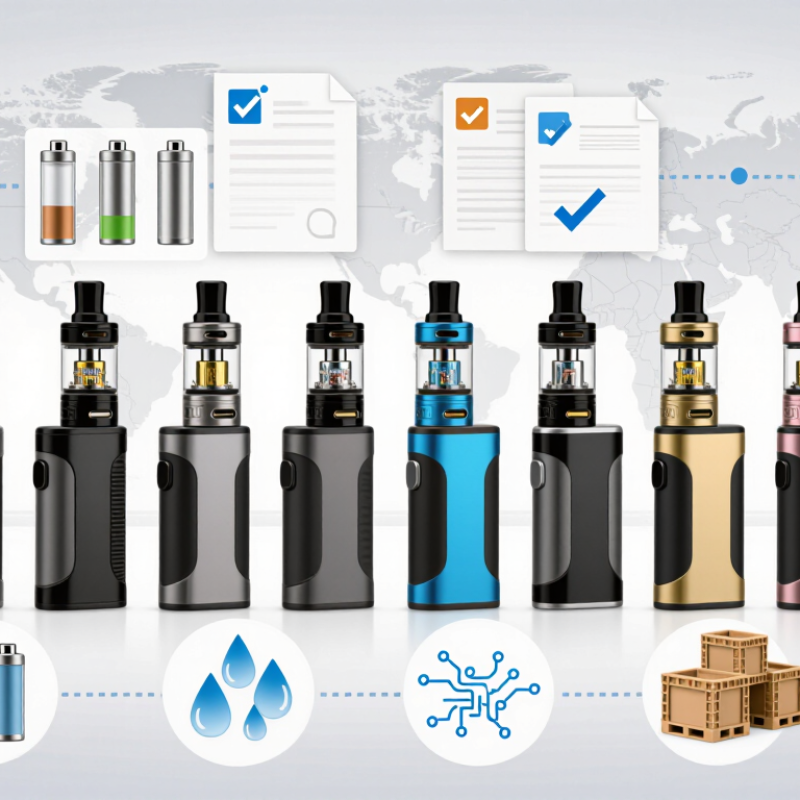
Safety requirements for disposable battery vape products differ by destination. A device accepted in one market may need different warnings, packaging, or electrical documentation elsewhere. Global buyers should check current rules with the importing authority or a qualified compliance professional before ordering. Do not rely on a supplier’s broad claim of “international compliance.” Ask which standard applies, who tested the product, and whether the report covers the exact model and battery configuration. Small differences matter.
Inspect labeling, battery protection, charging instructions where applicable, and traceable batch information. Request electrical safety test records and transport documentation for lithium batteries. Requirements may depend on battery capacity, shipping route, and carrier. Keep records tied to each shipment. A clean-looking label is not proof of safe construction. Paperwork can be incomplete.
Tips: Confirm local age-control and sales requirements; verify required language, warnings, and disposal symbols; and check whether local collection points accept small lithium batteries. Photograph package labels on receipt and compare them with approved samples. Set aside damaged, swollen, or leaking units and follow local disposal guidance. One detail is easy to miss: rules change, so repeat checks before each market launch.
Disposable Vape Regulatory Benchmark: Maximum Nicotine Concentration
Selected-market limits for nicotine-containing vaping products (mg/mL). These requirements are regulatory benchmarks, not product recommendations.
What this means: The selected jurisdictions set a maximum nicotine concentration of 20 mg/mL. In the EU and UK, additional rules include a 2 mL maximum capacity for cartridges or tanks. National and local rules may be stricter, and some markets restrict or prohibit disposable vapes.
Sources: EU Tobacco Products Directive 2014/40/EU, Article 20; UK Tobacco and Related Products Regulations 2016; Canada’s Concentration of Nicotine in Vaping Products Regulations (SOR/2021-123). Check current rules for the destination market before sale.
How to Choose the Right Option for Your Market
Choosing among disposable battery vape options starts with the rules in your target market. Check current product, labeling, age-verification, import, and advertising requirements with qualified local counsel or regulators. Rules can change, and a supplier’s assurance is not a substitute for verification.
Then assess practical specifications. Compare battery capacity, charging or disposal design, leak resistance, packaging durability, and clear safety instructions. Ask suppliers for relevant test reports and traceable batch records.
Small details matter: a crushed carton or unclear warning can create costly problems. Do not rely on a specification sheet alone.
Consider the full route to market. Estimate freight costs, storage conditions, retailer requirements, and local battery-waste arrangements. A low unit price may not reflect the total cost. Neither does it prove consistent quality. Market preferences vary, so use lawful customer research rather than assuming one format suits every region. I would also revisit the criteria after a small, compliant trial; early feedback can expose gaps that desk research misses. Some assumptions will be wrong. Keep records, review complaints, and pause sourcing if documentation or safety information is incomplete.