How to Source Compliant Disposable Vape Products in 2026?
Sourcing compliant Disposable Vape products in 2026 requires more than comparing prices and flavors. It requires documented evidence, careful supplier checks, and local regulatory awareness. Rules can differ by country, state, or sales channel. A product accepted in one market may fail another.
Reliable sourcing begins with traceable manufacturers. Request business licenses, facility details, quality certificates, and recent laboratory reports. Check whether test results match the exact model, batch, and formulation. Do not rely on a polished PDF alone. Ask who performed the testing and when it occurred. Independent verification remains valuable.
Packaging also deserves close attention. Review ingredient disclosures, nicotine information where applicable, batch codes, warnings, age restrictions, and recycling instructions. Inspect sample units for leaking pods, loose seals, inconsistent charging, or unclear labels. These small details often reveal larger quality problems.
A strong supplier should explain its quality-control process clearly. It should also provide recall procedures and responsive customer support. Keep written records for purchase orders, test reports, inspections, and shipping documents. Good records support accountability when problems appear.
No checklist is perfect. Regulations change, and documents can become outdated quickly. I have found that a second review often catches missing details. Buyers should confirm requirements with qualified legal or compliance professionals before placing large orders. The goal is not simply to find a low-cost product. It is to build a transparent supply chain that protects customers, supports responsible retailing, and remains defensible under changing 2026 standards.
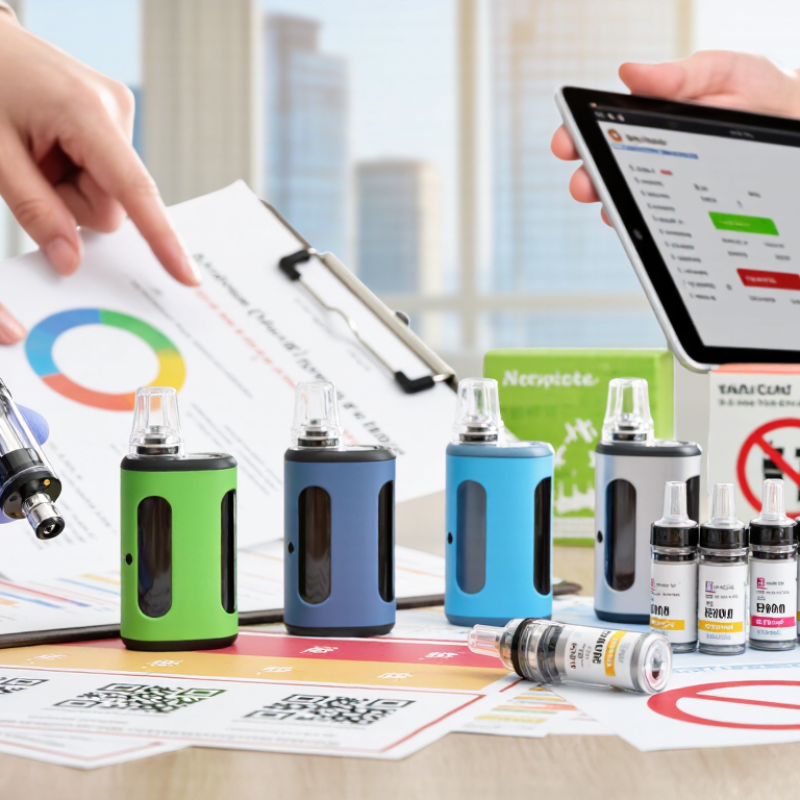
Define Compliance Requirements for Disposable Vape Products in 2026
In 2026, disposable vape compliance begins with a clearly defined market. Requirements differ by country, state, and sometimes municipality. A product accepted in one region may be restricted elsewhere. Build a written compliance matrix before contacting suppliers. Include permitted ingredients, nicotine limits, device specifications, labeling rules, packaging language, and sales restrictions.
Ask suppliers for current laboratory reports, ingredient disclosures, battery safety records, and production-batch traceability. Testing should cover emissions, electrical performance, leakage, and contamination risks. Confirm that reports match the exact model, formula, and production site. Generic certificates are not enough. I have seen paperwork look complete while missing a critical batch reference. That small gap can delay customs clearance or trigger a costly review. Also check recycling duties, child-resistant packaging requirements, warning statements, and age-verification expectations in the destination market.
Tips: Create a document folder for every product version. Record test dates, laboratory names, certificate numbers, and corrective actions. Request samples before approving a purchase. Inspect the label, charging behavior, seals, and airflow consistency. Have an independent compliance specialist review uncertain claims. Do not rely only on supplier assurances. Regulations can change during 2026, so schedule periodic checks with official authorities and qualified local advisers. ҡа
Verify Product Standards, Ingredients, and Safety Documentation
Sourcing compliant disposable vape products in 2026 requires evidence, not attractive packaging. Work only in jurisdictions where these products are legally permitted. Confirm the supplier’s manufacturing address, responsible contact, and regulatory registration. Ask which product standards apply to your market. Requirements may cover electrical safety, battery protection, emissions, labeling, packaging, and restricted ingredients. Verify each point against current official guidance.
Request a complete ingredient list, including nicotine source, solvents, flavoring substances, and potential allergens. The document should identify concentrations and batch references. Independent laboratory reports should match the exact product and production lot. Check testing dates, methods, laboratory accreditation, and detection limits. A certificate without traceable samples is weak evidence. Review the device’s battery specifications, charging design, leakage controls, and child-resistant features where required. Small details matter.
Keep safety data sheets, quality records, declarations, and transport documents in a controlled file. Record who approved each document and when it was reviewed. Ask for stability data and complaint-handling procedures. Speak with the factory’s quality manager, not only a sales representative. I have seen polished files hide missing batch numbers. That is a warning. Still, no audit is perfect; sampling can miss defects. Use incoming inspections and periodic retesting. If a supplier resists basic verification, pause the purchase and seek qualified regulatory advice.
Evaluate Manufacturers, Suppliers, and Production Controls
Sourcing compliant disposable vape products in 2026 requires more than comparing unit prices. Evaluate each manufacturer through documented quality systems, regulatory experience, and transparent production records. ISO 9001 certification is useful, but it does not replace product-specific evidence. Request batch specifications, ingredient declarations, laboratory reports, and traceability from incoming materials to finished units. The U.S. FDA’s 2024 National Youth Tobacco Survey reported 1.63 million current youth e-cigarette users, making age controls and responsible packaging essential supplier criteria.
Production controls should be visible, measurable, and independently checked. Review battery test records against relevant IEC safety standards, including overcharge, short-circuit, and thermal testing. Inspect fill-volume consistency, leakage rates, seal integrity, and device activation performance. Ask whether laboratories use validated methods and whether reports identify the exact batch tested. A supplier offering only a generic certificate is a warning sign. Small details matter.
Supplier audits should include factory walkthroughs, sample retention, corrective-action records, and change-control procedures. The WHO 2023 report on tobacco regulation emphasizes stronger product monitoring and enforcement capacity across markets. However, compliance documents can become outdated quickly. I would recheck them before every purchase cycle. That may feel excessive, but production changes are often poorly communicated. A strong partner accepts independent testing, preserves records, and blocks unapproved substitutions. Pricing comes later. Reliability comes first.
How to Source Compliant Disposable Vape Products in 2026?
Evaluate manufacturers, suppliers, and production controls against fixed EU and UK regulatory benchmarks.
How to use this chart: During supplier qualification, verify test reports, technical files, batch records, packaging artwork, and production inspections against the applicable market limits. EU and UK rules cap nicotine strength at 20 mg/mL, limit cartridges or tanks to 2 mL, and limit refill containers to 10 mL. Health warnings must cover at least 30% of the required packaging surfaces. In the UK, the sale and supply of single-use vapes has been prohibited since 1 June 2025, so disposable products are not lawful for UK sale in 2026.
Sources: European Union Directive 2014/40/EU, Articles 20 and 9; UK Tobacco and Related Products Regulations 2016; UK Environmental Protection (Single-use Vapes) Regulations 2024.
Confirm Packaging, Labeling, and Traceability Obligations
Sourcing compliant disposable vape products in 2026 starts with evidence, not attractive packaging.
Ask each supplier for current authorization records, manufacturing details, and market-specific compliance files. Requirements differ by jurisdiction. Do not rely on a generic certificate. Check whether the document names the exact product, production site, and validity period. I would also request a signed change-control process for materials, artwork, and suppliers.
Packaging should protect the product and communicate required information clearly.
Inspect samples physically. Look for sealed units, readable print, batch or lot identifiers, ingredient disclosures, warnings, age restrictions, and disposal instructions where required. Labels must match the approved product record, including nicotine strength, fill volume, and manufacturing date when applicable. Small print is a frequent failure point. A label that looks clear on a screen may become unreadable after shrink wrapping. Test cartons under warehouse lighting and handling conditions before placing a purchase order.
Traceability should work in both directions.
A lot code should connect the finished unit to production records, test results, shipment data, and responsible operators. Request a recall procedure with contact names, response times, and sample reconciliation records. Keep digital copies, but verify them against physical cartons. A spreadsheet can still contain errors. One useful review is a small mock recall: select one carton and trace it back, then forward to every recipient. If gaps appear, pause approval and document the correction. This step is sometimes skipped when deadlines feel urgent. That is a weakness worth revisiting.
Build a Compliant Purchasing and Ongoing Monitoring Process
Sourcing compliant disposable vape products in 2026 requires more than checking a supplier’s catalogue. Build a purchasing process around local product rules, age restrictions, approved ingredients, and required packaging. Ask suppliers for current authorization records, laboratory reports, safety data, and batch traceability documents. Verify each document independently. Do not rely on a scanned certificate alone.
Create a supplier file with legal entity details, manufacturing locations, inspection results, and corrective-action history. Before placing a large order, test a small approved batch. Check packaging, warning statements, ingredient information, device performance, and tamper evidence. Keep samples from every received batch. Record shipment dates, quantities, lot numbers, and inspection results. Clear records matter.
Monitoring must continue after purchase. Review regulatory updates on a fixed schedule. Recheck supplier documents before each reorder. Use random product testing when risk increases, such as a factory change or unexplained complaint. Train receiving staff to quarantine damaged or undocumented goods. No exceptions. A spreadsheet can still mislead when entries are copied forward. We once treated an old report as current, and that weakness deserved correction. Add document-expiry alerts, independent approvals, and periodic supplier audits. Review complaints for patterns, not isolated stories. If evidence becomes uncertain, pause distribution until qualified compliance staff assess the product.